
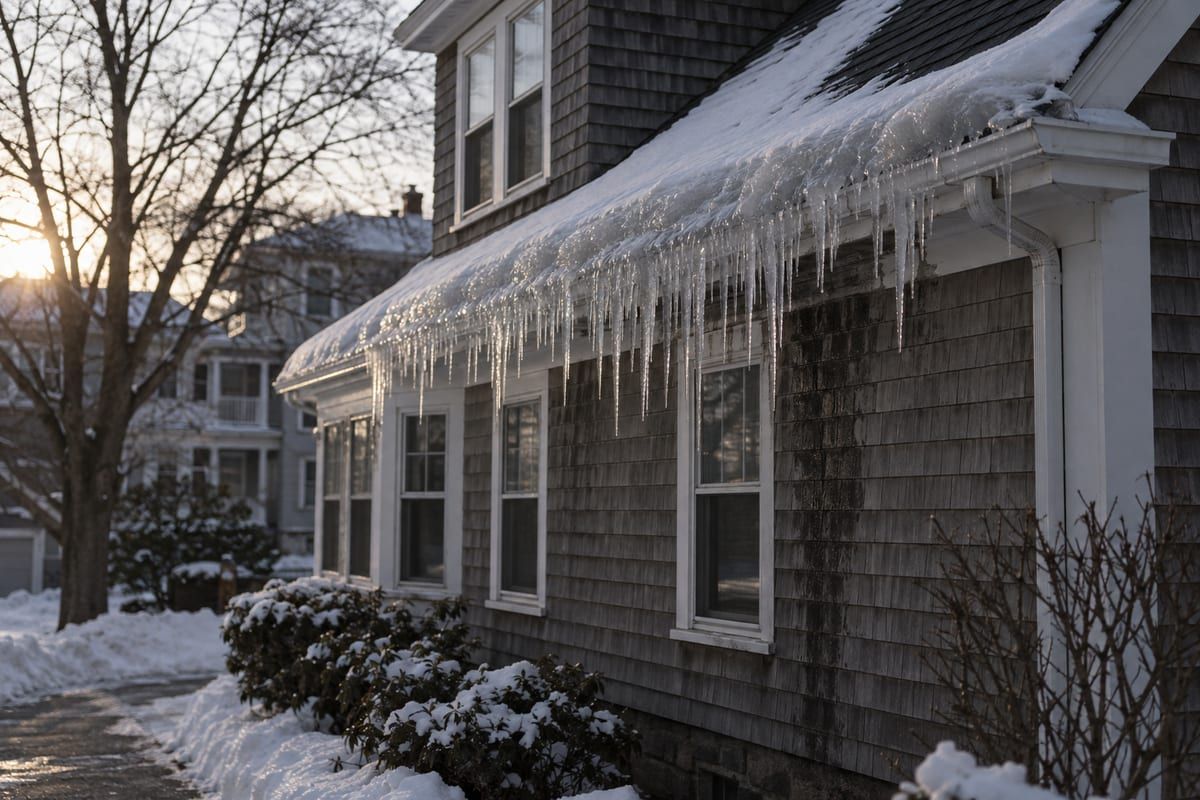
Ice Dam Prevention · Rhode Island
Ice Dams: Causes, Damage, and Prevention for Rhode Island Roofs
A ridge of ice along your eaves isn't just a winter eyesore. It's a sign that heat is escaping through your attic and that water is being forced somewhere it shouldn't go. Here's how ice dams actually form, what they damage, and what stops them for good.
Free EstimateRTP-····-···· · Warwick Office
Free Estimate
RTP-····-····Warwick Office
Step 1 of 5 · About 1 Minute
What Does Your Home Need?
Pick the closest one. You don't need the right words for it.
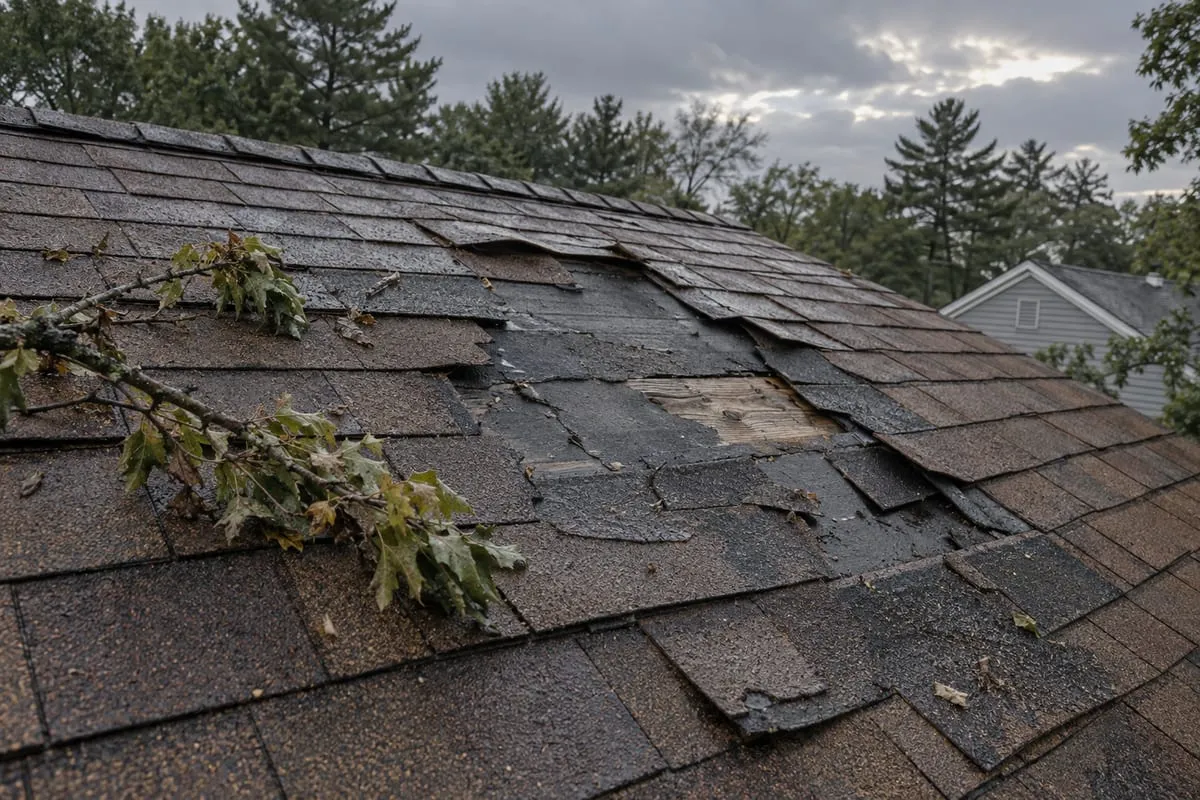 Something's Leaking or DamagedA stain on the ceiling, water in the attic, missing shingles.
 Old Roof, Weighing ReplacementCurling, bald spots, or it's just been a long time.
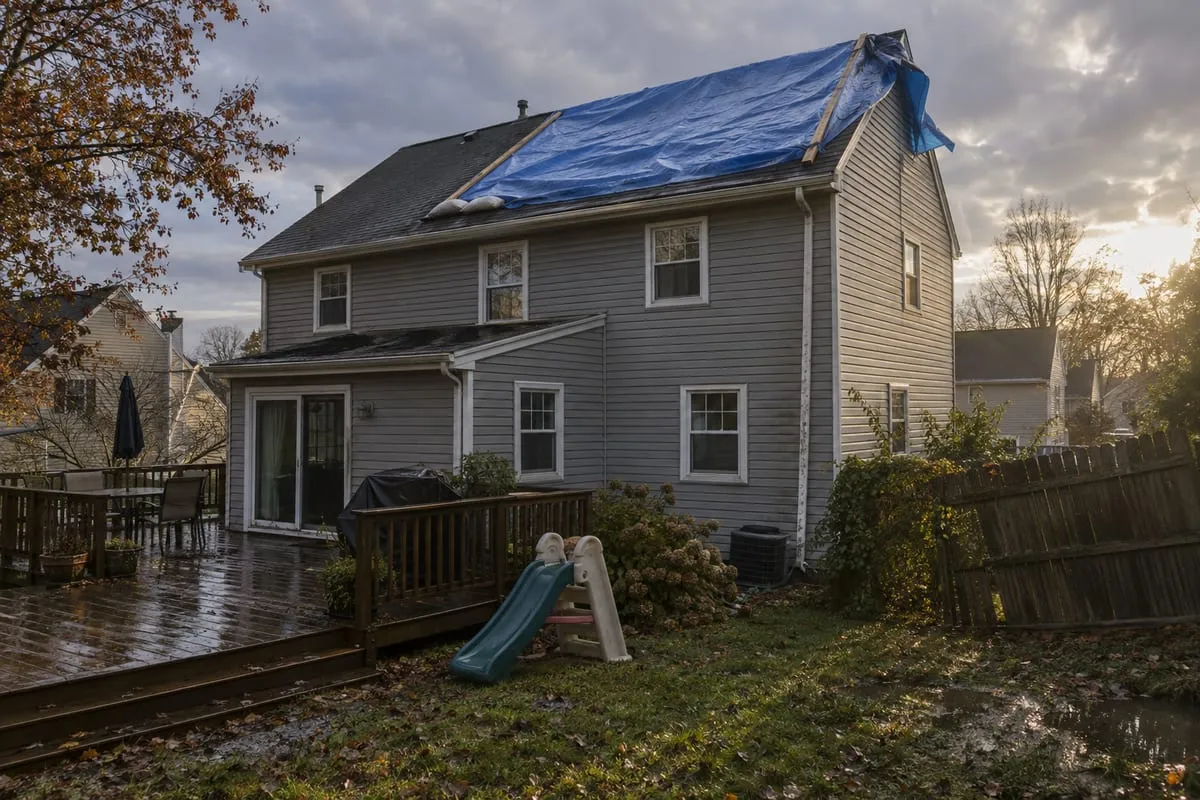 Storm DamageWind, a fallen limb, hail. Claim or no claim.
 Not Sure, Need an InspectionAn inspection or a second opinion.
 Gutters, Siding or ExteriorGutters, siding, trim, windows, skylights.
 Commercial BuildingFlat or low-slope roofs, maintenance, replacement.
Where Are You Seeing It?
Pick the closest. We'll look at the rest on site.
How Old Is the Roof?
A rough guess is fine.
Have You Started an Insurance Claim?
Either way, we can take a look.
What's Behind the Inspection?
Pick the closest.
Which Part of the Exterior?
Pick the main one. Mention the rest at the end.
What Does the Building Need?
Flat and low-slope roofs included.
What Kind of Property Is It?
When Do You Want It Done?
Where Should We Reach You?
Request Sent
Reference RTP-····-····
We'll reach out from (401) 593-1512 during business hours. Need us sooner? Call that number any time.
Nothing is sent until you say so.
ContinueRather Talk?(401) 593-1512
- GAF Master Elite®
GAF Master Elite® Certified contractor, Cert. #1111816.
- BBB A+
Accredited by the Better Business Bureau since September 29, 2022.
- GC-47694
Licensed and registered general contractor in Rhode Island, valid through September 19, 2027.
- GAF Extended Warranty
Extended manufacturer warranty available on qualifying installations. Coverage terms vary by product and installation.
What An Ice Dam Actually Is
An ice dam is a ridge of ice that builds up along the edge of a roof, usually right above the gutter line, after snow on the upper roof melts and refreezes before it can drain off. It takes three conditions at once: snow sitting on the roof, a warm upper roof surface (above 32°F, typically from heat escaping the attic), and a cold lower roof edge at or below freezing. Snowmelt runs down from the warm section, hits the cold eave, and freezes into a dam. Once that ridge forms, meltwater backs up behind it instead of draining, and it has nowhere to go but under your shingles.
Sun matters too, even in cold weather. Direct sunlight hitting snow-covered shingles can drive melting at the surface even when the outside air is well below freezing, which is part of why ice dams can form and grow on a clear, sunny day in the teens or twenties just as easily as during a warm spell.
Why A Warm Attic Is The Real Cause
Gutters don't cause ice dams, they just concentrate the ice once it forms. The real driver is heat leaking from your living space into the attic and warming the underside of the roof deck unevenly. Common sources: insufficient attic insulation, gaps where insulation doesn't fully cover the attic floor, air leaks around recessed lights, plumbing stacks, chimneys, and attic hatches, and bathroom or kitchen exhaust fans that vent into the attic instead of outside. All of it adds up to a roof that's warmer at the ridge than it is at the eave, which is exactly the setup an ice dam needs.
Roof shape plays a role too. Valleys, dormers, and low-slope sections collect more snow and drain more slowly than a simple gable roof, so they're more prone to damming even on a well-insulated house.
What Ice Dams Actually Damage
The water backed up behind an ice dam doesn't just sit there, it finds the path of least resistance, which is usually under a shingle and into the roof deck. Left unaddressed over a winter or across multiple seasons, that can mean:
- Rot in the roof deck, fascia, and framing where water sits against wood repeatedly.
- Interior water stains and ceiling damage where meltwater tracks along the underside of the roof and drips into living space.
- Wet insulation that stops performing, in some cases permanently, even after it dries.
- Peeling paint and damaged drywall in exterior walls and ceilings where water gets into the cavity.
- Mold growth wherever moisture sits in an enclosed space long enough.
- Damaged gutters and downspouts from the weight of the ice itself pulling on fasteners and seams.
None of that shows up all at once. It's usually a stain that shows up mid-winter, or damage discovered the following spring, long after the ice itself is gone. If a spring inspection turns up isolated damage, that's usually a roof repair; widespread wear from repeated ice-dam seasons is more often a sign the roof needs a closer look at replacement, covered in our guide on signs you need roof repair vs. a full replacement.
What Actually Prevents Ice Dams
Removing snow after the fact helps in the moment, but it doesn't fix the reason the dam formed. Real prevention means keeping the whole roof deck close to outside temperature, so there's no warm zone for snow to melt against in the first place:
- Seal air leaks in the attic floor around light fixtures, plumbing and wiring penetrations, and the attic hatch, so warm household air stops leaking upward.
- Bring attic insulation up to a proper depth and even coverage, with no thin spots or gaps, especially at the eaves where insulation is easiest to shortchange.
- Keep soffit and ridge ventilation clear so cold outside air can actually flow across the underside of the roof deck; insulation should have roughly three inches of clearance from the sheathing so it doesn't block that airflow.
- Vent bathroom and kitchen exhaust fans all the way outside, never into the attic, where they add both heat and moisture.
- Use a roof rake to clear snow after a storm, working from the ground on the lower few feet of roof, before it has a chance to melt and refreeze.
What we don't recommend: chipping at ice dams with a shovel or ice pick, or getting up on a snow- and ice-covered roof yourself. Both are a good way to damage shingles or get hurt. If a dam has already formed and water is getting in, that's a job for a professional, not a Saturday project. A standing roof maintenance plan is also a practical way to catch attic insulation and ventilation gaps before winter, rather than after a dam has already formed.
The RI Building Code Requirement You're Probably Already Covered By
Rhode Island's residential building code requires an ice barrier, either two layers of cemented underlayment or a self-adhering waterproof membrane, under the roofing material at the eaves on homes in areas with a history of ice damming, extending at least 24 inches inside the exterior wall line. On steeper roofs (8:12 pitch or greater), that coverage extends at least 36 inches up the roof slope from the eave. It's a code-required backstop specifically for the exact failure mode an ice dam creates: water backing up under the shingles at the eave. On a proper roof replacement, we install ice barrier to code as a matter of course, not an upsell.
Questions
Frequently asked questions
Do ice dams only happen on old roofs?
No. Ice dams are driven by attic heat loss and ventilation, not the age of the shingles. A brand-new roof over a poorly insulated or poorly vented attic can dam just as easily as an old one. The fix is almost always in the attic, not on the shingle surface.
Will a metal roof stop ice dams?
It can help, since a smoother metal surface sheds snow and ice more readily than shingles. But it doesn't fix a warm attic on its own. If heat is still leaking into the attic and warming the roof deck unevenly, ice can still form, just somewhat less than it would on shingles.
Are heat cables a good fix for ice dams?
They're a band-aid, not a fix. Heat cables can create a channel for meltwater to drain, but they treat the symptom while the attic keeps leaking heat. We generally recommend fixing insulation and ventilation first and treating heat cables as a last resort for a roof shape that's genuinely hard to insulate around, like a complex valley.
How do I know if my attic insulation or ventilation is the problem?
Icicles and ice buildup concentrated in specific spots, especially above rooms you heat, near bathroom exhaust vents, or around chimneys, usually point to a localized heat leak. A roof inspection that includes a look in the attic can trace it to the source instead of guessing from the ground.
Can an ice dam cause damage even if I don't see a leak inside?
Yes. Water can sit in the roof deck, sheathing, and insulation for a while before it shows up as a visible interior stain, especially if it's tracking sideways under the shingles rather than dripping straight down. That's part of why a spring inspection after a hard winter is worth doing even with no obvious signs indoors.
Should I clear snow off my whole roof to prevent ice dams?
Focus on the lower few feet near the eaves with a roof rake from the ground, that's the zone where dams actually form. Climbing onto a snow-covered roof to clear the whole thing is a safety risk we don't recommend, and it's not necessary to prevent damming.
Serving Rhode Island
- Ice dams: causes, damage, and prevention for rhode island roofs in Barrington
- Ice dams: causes, damage, and prevention for rhode island roofs in Bristol
- Ice dams: causes, damage, and prevention for rhode island roofs in Burrillville
- Ice dams: causes, damage, and prevention for rhode island roofs in Central Falls
- Ice dams: causes, damage, and prevention for rhode island roofs in Charlestown
- Ice dams: causes, damage, and prevention for rhode island roofs in Coventry
- Ice dams: causes, damage, and prevention for rhode island roofs in Cranston
- Ice dams: causes, damage, and prevention for rhode island roofs in Cumberland
- Ice dams: causes, damage, and prevention for rhode island roofs in East Greenwich
- Ice dams: causes, damage, and prevention for rhode island roofs in East Providence
- Ice dams: causes, damage, and prevention for rhode island roofs in Exeter
- Ice dams: causes, damage, and prevention for rhode island roofs in Foster
- Ice dams: causes, damage, and prevention for rhode island roofs in Glocester
- Ice dams: causes, damage, and prevention for rhode island roofs in Hopkinton
- Ice dams: causes, damage, and prevention for rhode island roofs in Jamestown
- Ice dams: causes, damage, and prevention for rhode island roofs in Johnston
- Ice dams: causes, damage, and prevention for rhode island roofs in Lincoln
- Ice dams: causes, damage, and prevention for rhode island roofs in Little Compton
- Ice dams: causes, damage, and prevention for rhode island roofs in Middletown
- Ice dams: causes, damage, and prevention for rhode island roofs in Narragansett
- Ice dams: causes, damage, and prevention for rhode island roofs in New Shoreham
- Ice dams: causes, damage, and prevention for rhode island roofs in Newport
- Ice dams: causes, damage, and prevention for rhode island roofs in North Kingstown
- Ice dams: causes, damage, and prevention for rhode island roofs in North Providence
- Ice dams: causes, damage, and prevention for rhode island roofs in North Smithfield
- Ice dams: causes, damage, and prevention for rhode island roofs in Pawtucket
- Ice dams: causes, damage, and prevention for rhode island roofs in Portsmouth
- Ice dams: causes, damage, and prevention for rhode island roofs in Providence
- Ice dams: causes, damage, and prevention for rhode island roofs in Richmond
- Ice dams: causes, damage, and prevention for rhode island roofs in Scituate
- Ice dams: causes, damage, and prevention for rhode island roofs in Smithfield
- Ice dams: causes, damage, and prevention for rhode island roofs in South Kingstown
- Ice dams: causes, damage, and prevention for rhode island roofs in Tiverton
- Ice dams: causes, damage, and prevention for rhode island roofs in Warren
- Ice dams: causes, damage, and prevention for rhode island roofs in Warwick
- Ice dams: causes, damage, and prevention for rhode island roofs in West Greenwich
- Ice dams: causes, damage, and prevention for rhode island roofs in West Warwick
- Ice dams: causes, damage, and prevention for rhode island roofs in Westerly
- Ice dams: causes, damage, and prevention for rhode island roofs in Woonsocket
Serving Massachusetts
- Roofing in Attleboro, MA
- Roofing in Bellingham, MA
- Roofing in Blackstone, MA
- Roofing in Bridgewater, MA
- Roofing in Brockton, MA
- Roofing in Dartmouth, MA
- Roofing in Easton, MA
- Roofing in Fall River, MA
- Roofing in Foxborough, MA
- Roofing in Franklin, MA
- Roofing in Mansfield, MA
- Roofing in Middleborough, MA
- Roofing in Milford, MA
- Roofing in New Bedford, MA
- Roofing in North Attleborough, MA
- Roofing in Norton, MA
- Roofing in Plymouth, MA
- Roofing in Rehoboth, MA
- Roofing in Seekonk, MA
- Roofing in Somerset, MA
- Roofing in Swansea, MA
- Roofing in Taunton, MA
- Roofing in Uxbridge, MA
- Roofing in Wareham, MA
- Roofing in Westport, MA
- Roofing in Worcester, MA
Related pages
- Roof inspection Cranston RI
- Roof leak repair Rhode Island
- Roof replacement Providence
- Hail damage roof Rhode Island
- Roof maintenance Warwick RI
- Signs you need a new roof
- Asphalt shingle vs metal roofing new england
- Leaking roof
- What affects roof replacement cost RI
- Storm damage roof insurance claim Rhode Island
- Best time to replace a roof
- Flat roof repair
- GAF golden pledge limited warranty explained
Back to All roofing guides
Worried About Ice Dams On Your Roof?
Request a free, on-roof inspection or call (401) 593-1512. We'll check your attic insulation, ventilation, and ice barrier coverage, and give you a straight answer on what your roof actually needs before winter.