
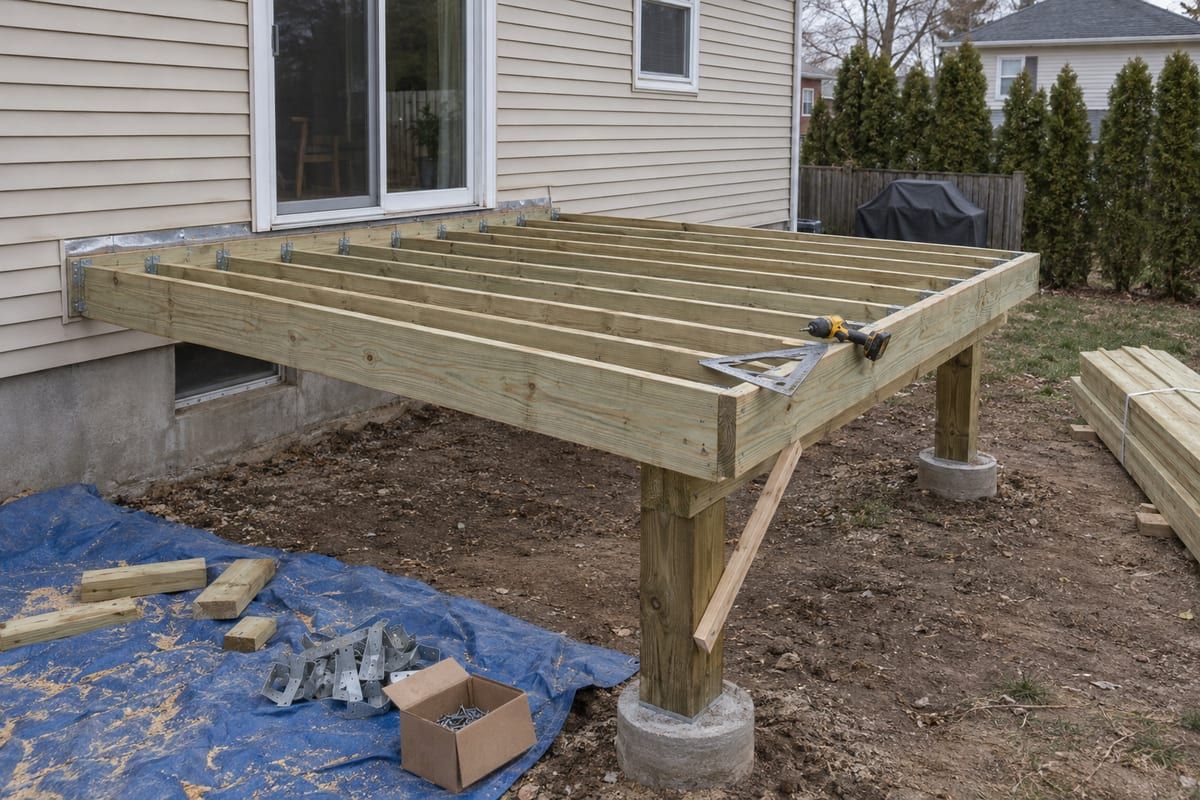
Decking · Warwick & Rhode Island
Deck Building & Repair in Warwick, RI
A deck with boards that flex when you walk across them. Railings that wobble more every summer. Rhode Island homeowners call RTP Roofing when it's time to stop patching a deck and build one that's actually solid.
Free EstimateRTP-····-···· · Warwick Office
Free Estimate
RTP-····-····Warwick Office
Step 1 of 5 · About 1 Minute
What Does Your Home Need?
Pick the closest one. You don't need the right words for it.
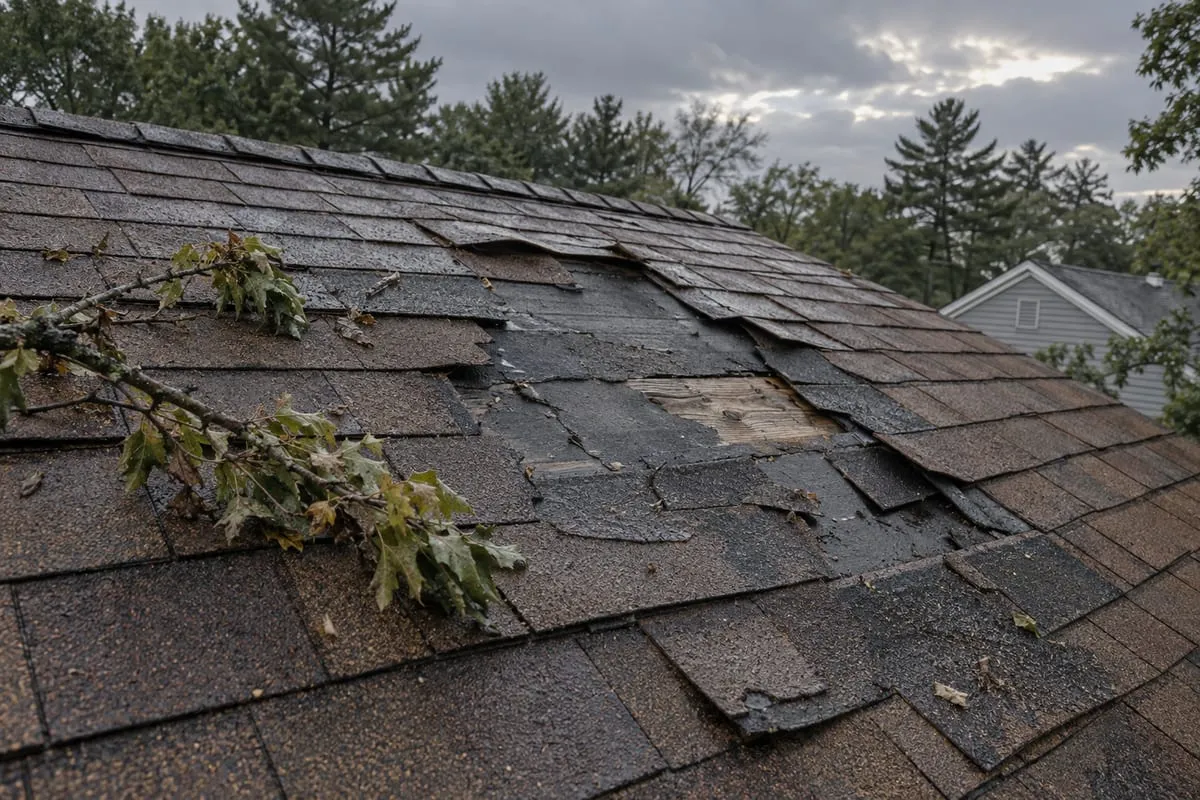 Something's Leaking or DamagedA stain on the ceiling, water in the attic, missing shingles.
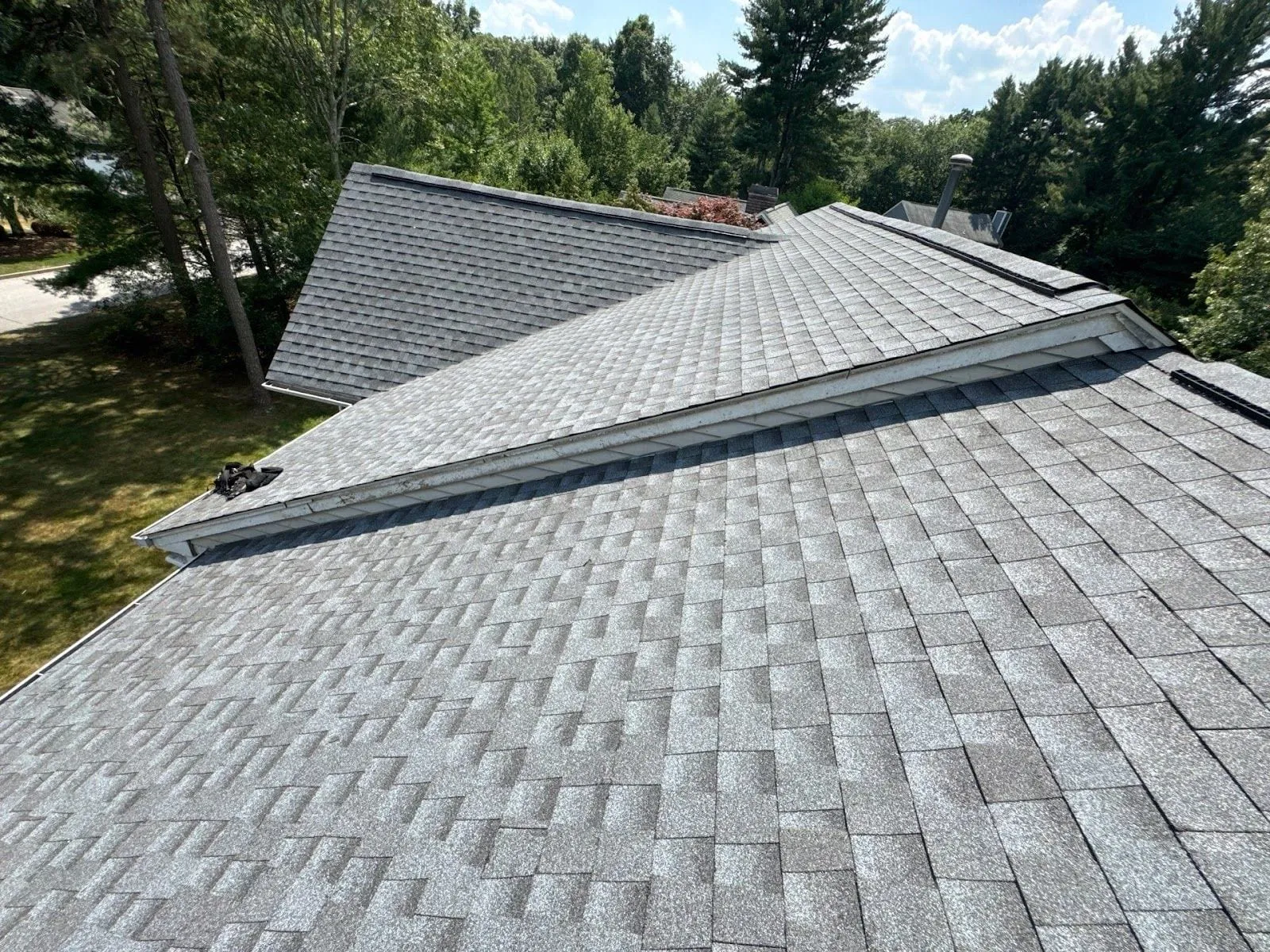 Old Roof, Weighing ReplacementCurling, bald spots, or it's just been a long time.
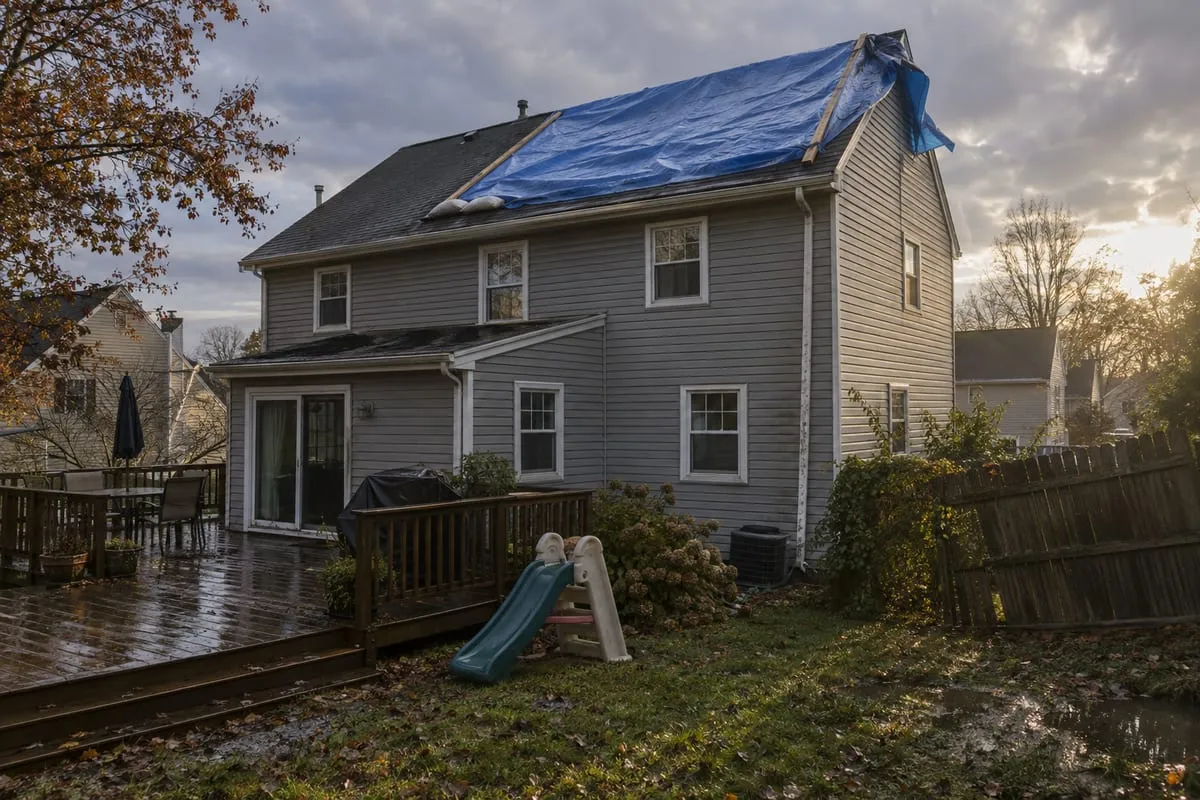 Storm DamageWind, a fallen limb, hail. Claim or no claim.
 Not Sure, Need an InspectionAn inspection or a second opinion.
 Gutters, Siding or ExteriorGutters, siding, trim, windows, skylights.
 Commercial BuildingFlat or low-slope roofs, maintenance, replacement.
Where Are You Seeing It?
Pick the closest. We'll look at the rest on site.
How Old Is the Roof?
A rough guess is fine.
Have You Started an Insurance Claim?
Either way, we can take a look.
What's Behind the Inspection?
Pick the closest.
Which Part of the Exterior?
Pick the main one. Mention the rest at the end.
What Does the Building Need?
Flat and low-slope roofs included.
What Kind of Property Is It?
When Do You Want It Done?
Where Should We Reach You?
Request Sent
Reference RTP-····-····
We'll reach out from (401) 593-1512 during business hours. Need us sooner? Call that number any time.
Nothing is sent until you say so.
ContinueRather Talk?(401) 593-1512
- GAF Master Elite
GAF Master Elite® Certified contractor, Cert. #1111816.
- BBB A+
Accredited by the Better Business Bureau since September 29, 2022.
- RI GC-47694
Licensed and registered general contractor in Rhode Island, valid through September 19, 2027.
- GAF Golden Pledge
Extended manufacturer warranty available on qualifying installations. Coverage terms vary by product and installation.
What A Failing Deck Actually Risks
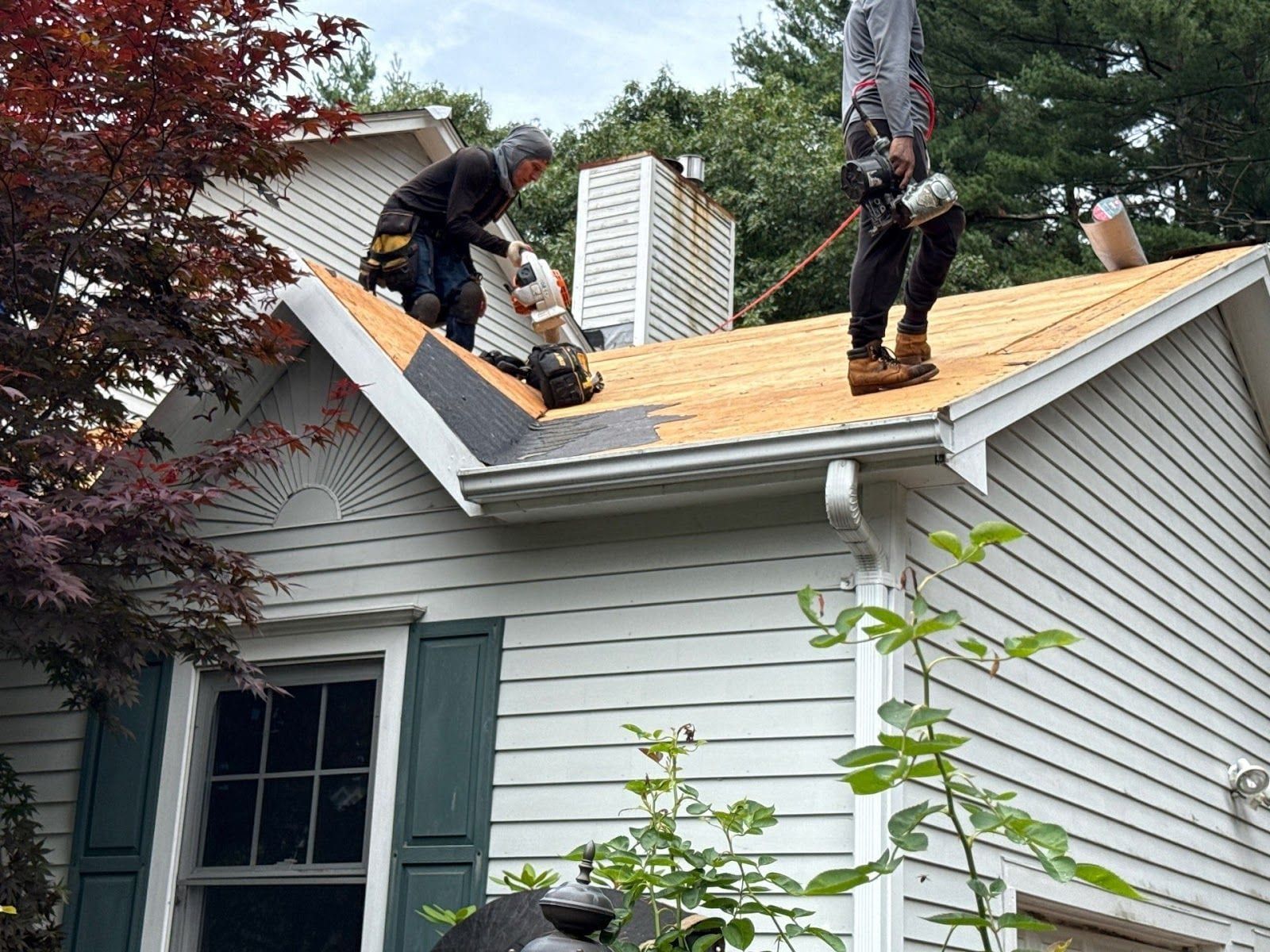
A deck takes the same weather beating a roof does: sun, rain, freeze-thaw cycles, and constant weight. New England winters are especially hard on an aging deck, since water that gets into a crack and freezes expands and widens it, a cycle that repeats every cold season until something fails. When the structure underneath weakens, it's not just cosmetic. Loose railings, spongy boards, and rusted fasteners are safety issues before they're an eyesore.
RTP Roofing builds and repairs decks as part of our exterior work, using the same attention to structure and weatherproofing we bring to a roof replacement, because a deck that isn't built to shed water the right way will fail the same way a bad roof does. It's also a common pairing: homeowners doing a full roof job often tackle the deck or siding in the same season while scaffolding and crews are already on site.
The RTP Roofing Difference
We're RI-registered (GC-47694). We inspect your deck and we build or repair it, from the ledger board to the last railing baluster.
We start with an honest inspection and tell you whether the structure supports a repair or needs a full rebuild, before we talk price. While we work, we protect your landscaping and the surrounding property, and the job isn't done until we've walked the finished deck with you and cleared the site. See our gutters and window replacement pages for the other exterior work we commonly pair with a deck project.
How We Build Or Repair A Deck, Step By Step
A deck is only as strong as what's underneath it, so the sequence matters:
- Ledger board attachment. Where a deck attaches to the house, the ledger board is bolted through the house framing with lag screws or through-bolts and washers, never just nailed on, and flashed so water sheds away from the house instead of into it.
- Footings. Support posts sit on footings sized and set to the depth your town's building official requires, so the structure doesn't heave or settle through New England's freeze-thaw cycles.
- Framing and joist hangers. Joists connect to the ledger and beams with corrosion-resistant metal hangers rather than being toe-nailed, so the load path is mechanical, not just nails and hope.
- Decking and railings. Boards and railings go on last, spaced and fastened to the material's own installation specs, whether that's wood or composite.
Most Rhode Island towns require a building permit once a deck is more than 30 inches above grade, and the application typically needs a plot plan plus footing, joist, and railing details. We handle that paperwork as part of the job so it passes inspection the first time.
Wood Or Composite: An Honest Comparison
There's no universally "right" material, only the right tradeoff for your budget and how much upkeep you want to take on.
- Pressure-treated wood. The lowest material cost, and easy to repair board by board. It needs re-staining or sealing every couple of years to resist rot and graying, and individual boards typically need replacing as they age.
- Cedar. A more attractive grain than pressure-treated lumber and naturally more rot-resistant, at a higher material cost. It still needs periodic staining or sealing to hold its color and keep shedding water well.
- Composite or PVC decking. The highest upfront material cost, but little to no staining or sealing, and better resistance to rot and insect damage than any wood option. Color and grain are molded in, so scratches show differently than on wood, and darker composite can run hotter underfoot in direct sun than a lighter wood deck.
We'll walk through the tradeoffs for your specific project, not just push whichever material we happen to have on the truck.
Warning Signs Worth Checking Before Summer
A few things worth checking before you put weight on a deck after a New England winter:
- Wobbly or loose railings. Railings should feel solid when you lean on them; movement usually means a fastener or post has failed.
- Soft or spongy boards. Boards that give underfoot are usually rotting from moisture trapped beneath them.
- Rusted or corroded hardware. Fasteners and joist hangers exposed to years of weather can weaken even when the wood above looks fine.
- Gaps at the ledger board. Where the deck attaches to the house is the most common failure point on an older deck; separation there is a structural issue, not cosmetic.
Any of these is worth a look before the deck sees heavy use again.
How it works
- Step 1
Inspection & Consultation
We check the structure, ledger board, footings, and decking material to find out what's actually wrong, not just what's visible from the top.
- Step 2
Design & Material Selection
We talk through layout, railings, and material, wood or composite, based on your budget and how you use the space.
- Step 3
Construction or Repair
We build or repair the deck to current structural standards, protecting your landscaping and the surrounding property while we work.
- Step 4
Final Walkthrough
We walk the finished deck with you and confirm it's solid, level, and built to last before we call the job done.
Questions
Frequently asked questions
Should I repair my deck or replace it?
It depends on the structure underneath. If the framing and footings are sound, we can often repair or replace just the surface boards and railings. If the structure itself is failing, rebuilding is usually the better investment.
What decking materials do you work with?
Both traditional wood and composite decking. We'll walk through the maintenance and cost tradeoffs of each for your project.
Can you build a deck at the same time as a roof or siding project?
Yes, though it's a separate structural project from roofing. We'll scope it alongside any exterior work you're doing so scheduling and access line up.
How do I know if my deck is actually unsafe?
Wobbly railings, soft or spongy boards, rusted hardware, and gaps where the deck attaches to the house are the main warning signs. We check all four during an inspection and tell you honestly what needs attention.
Wood or composite decking, which is right for my project?
Wood costs less up front but needs regular staining or sealing. Composite costs more initially but needs little maintenance and holds up well to New England weather. We'll walk through both for your budget and how you plan to use the deck.
Does a new deck require a building permit?
In most Rhode Island towns, yes, once a deck is more than 30 inches above grade. The application typically needs a plot plan plus footing, joist, and railing details. We pull the permit and handle the inspection process as part of the job.
Serving Rhode Island
- Deck building & repair in Barrington
- Deck building & repair in Bristol
- Deck building & repair in Burrillville
- Deck building & repair in Central Falls
- Deck building & repair in Charlestown
- Deck building & repair in Coventry
- Deck building & repair in Cranston
- Deck building & repair in Cumberland
- Deck building & repair in East Greenwich
- Deck building & repair in East Providence
- Deck building & repair in Exeter
- Deck building & repair in Foster
- Deck building & repair in Glocester
- Deck building & repair in Hopkinton
- Deck building & repair in Jamestown
- Deck building & repair in Johnston
- Deck building & repair in Lincoln
- Deck building & repair in Little Compton
- Deck building & repair in Middletown
- Deck building & repair in Narragansett
- Deck building & repair in New Shoreham
- Deck building & repair in Newport
- Deck building & repair in North Kingstown
- Deck building & repair in North Providence
- Deck building & repair in North Smithfield
- Deck building & repair in Pawtucket
- Deck building & repair in Portsmouth
- Deck building & repair in Providence
- Deck building & repair in Richmond
- Deck building & repair in Scituate
- Deck building & repair in Smithfield
- Deck building & repair in South Kingstown
- Deck building & repair in Tiverton
- Deck building & repair in Warren
- Deck building & repair in Warwick
- Deck building & repair in West Greenwich
- Deck building & repair in West Warwick
- Deck building & repair in Westerly
- Deck building & repair in Woonsocket
Serving Massachusetts
- Deck building & repair in Attleboro
- Deck building & repair in Bellingham
- Deck building & repair in Blackstone
- Deck building & repair in Bridgewater
- Deck building & repair in Brockton
- Deck building & repair in Dartmouth
- Deck building & repair in Easton
- Deck building & repair in Fall River
- Deck building & repair in Foxborough
- Deck building & repair in Franklin
- Deck building & repair in Mansfield
- Deck building & repair in Middleborough
- Deck building & repair in Milford
- Deck building & repair in New Bedford
- Deck building & repair in North Attleborough
- Deck building & repair in Norton
- Deck building & repair in Plymouth
- Deck building & repair in Rehoboth
- Deck building & repair in Seekonk
- Deck building & repair in Somerset
- Deck building & repair in Swansea
- Deck building & repair in Taunton
- Deck building & repair in Uxbridge
- Deck building & repair in Wareham
- Deck building & repair in Westport
- Deck building & repair in Worcester
Back to Additional exterior services
Get A Straight Answer On Your Deck
Request a free estimate or call (401) 593-1512. We'll tell you whether your deck needs a repair or a rebuild before we talk price.