
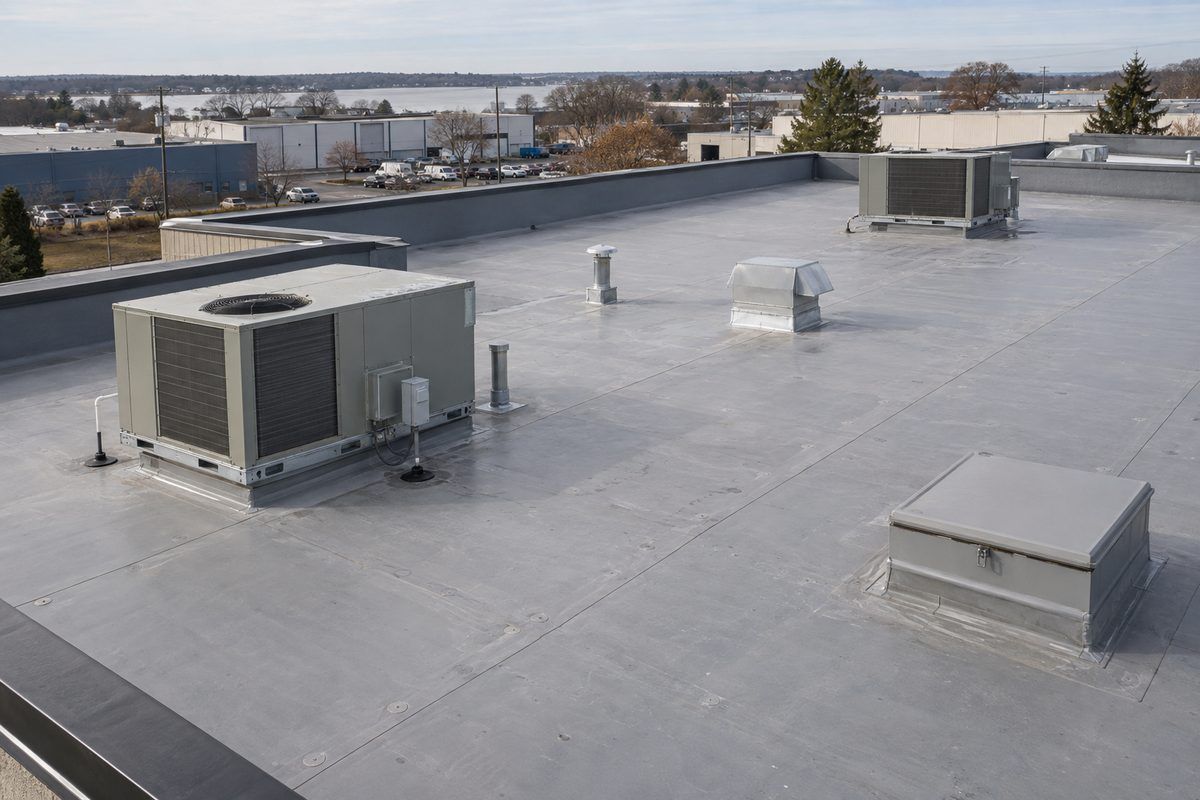
Commercial Roof Replacement · Warwick & Rhode Island
Commercial Roof Replacement in Warwick, RI
Another patch that lasted six months. Ceiling tiles stained again after every heavy rain. At some point patching a commercial roof costs more than replacing it, and RTP Roofing will tell you honestly when that point has arrived.
Free EstimateRTP-····-···· · Warwick Office
Free Estimate
RTP-····-····Warwick Office
Step 1 of 5 · About 1 Minute
What Does Your Home Need?
Pick the closest one. You don't need the right words for it.
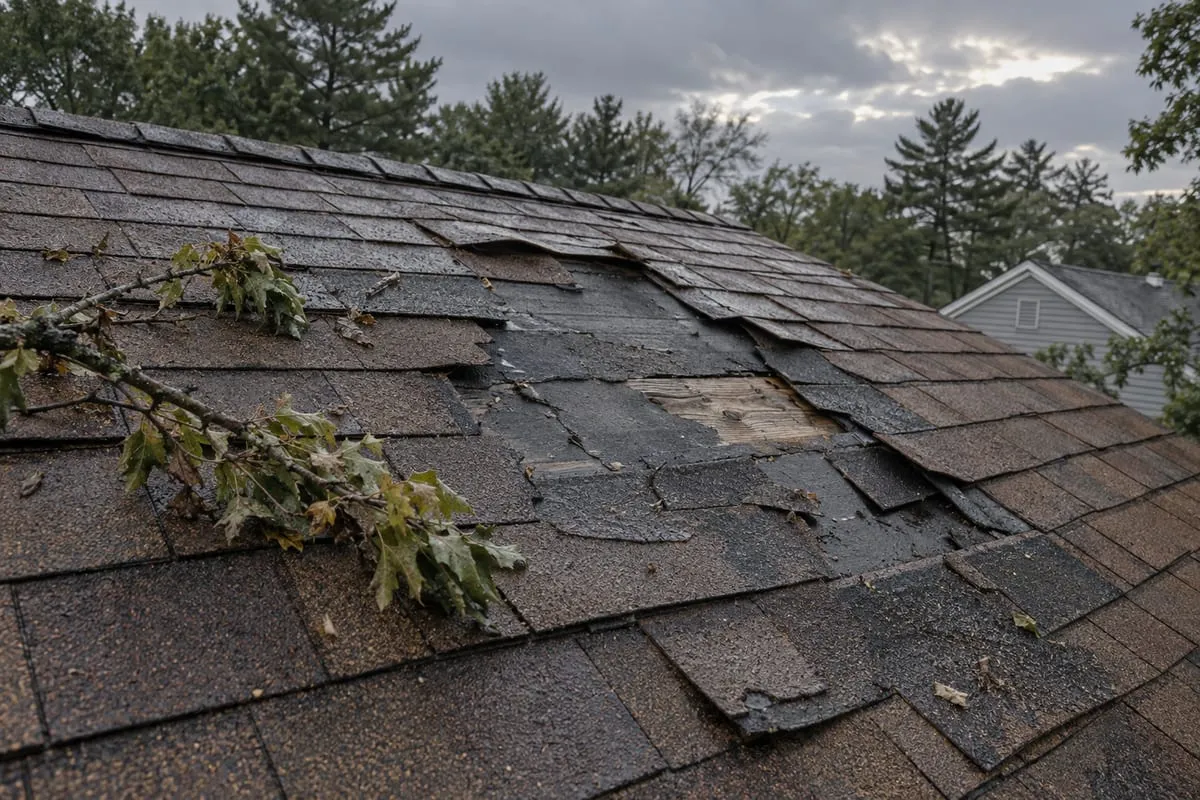 Something's Leaking or DamagedA stain on the ceiling, water in the attic, missing shingles.
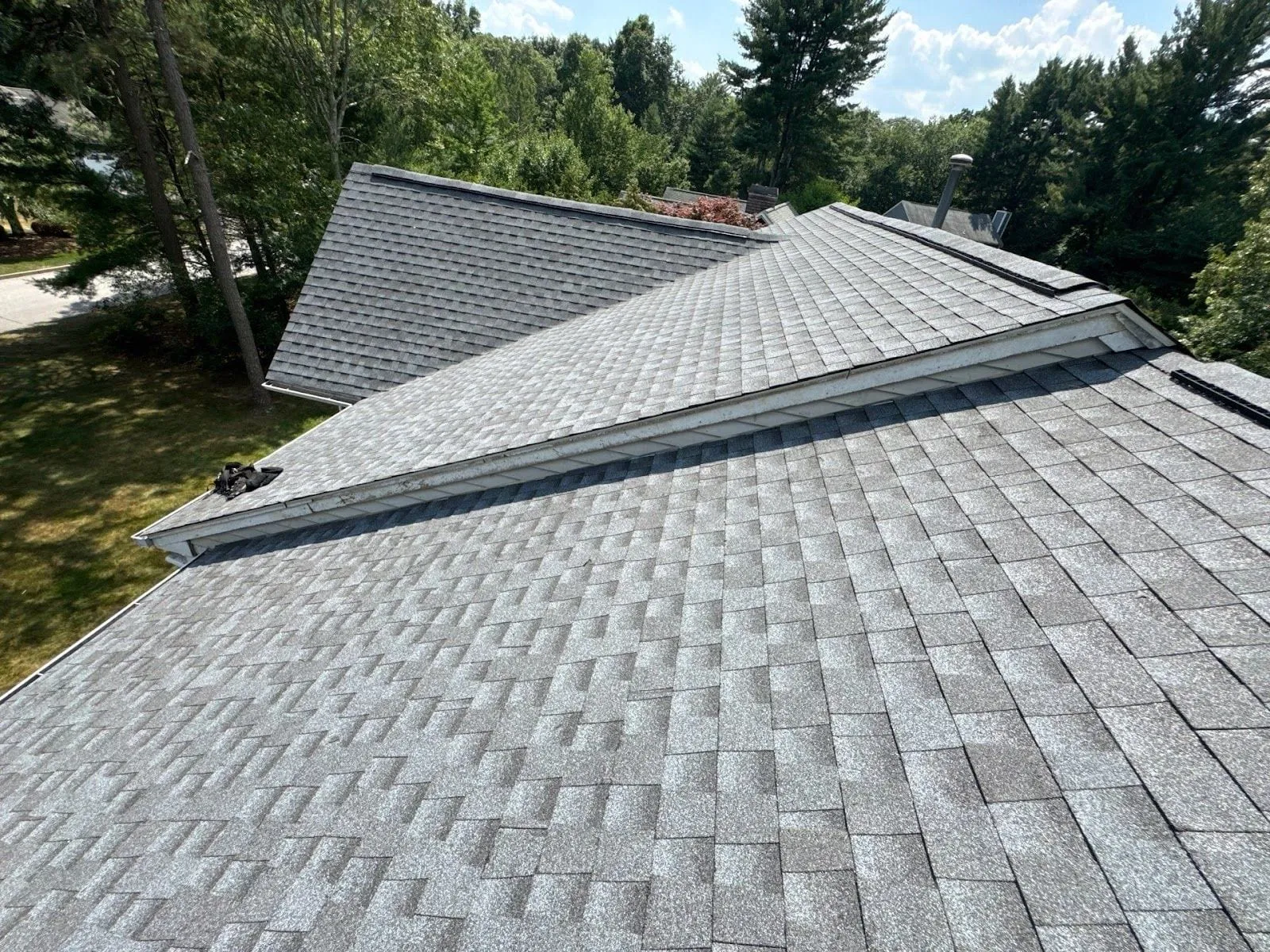 Old Roof, Weighing ReplacementCurling, bald spots, or it's just been a long time.
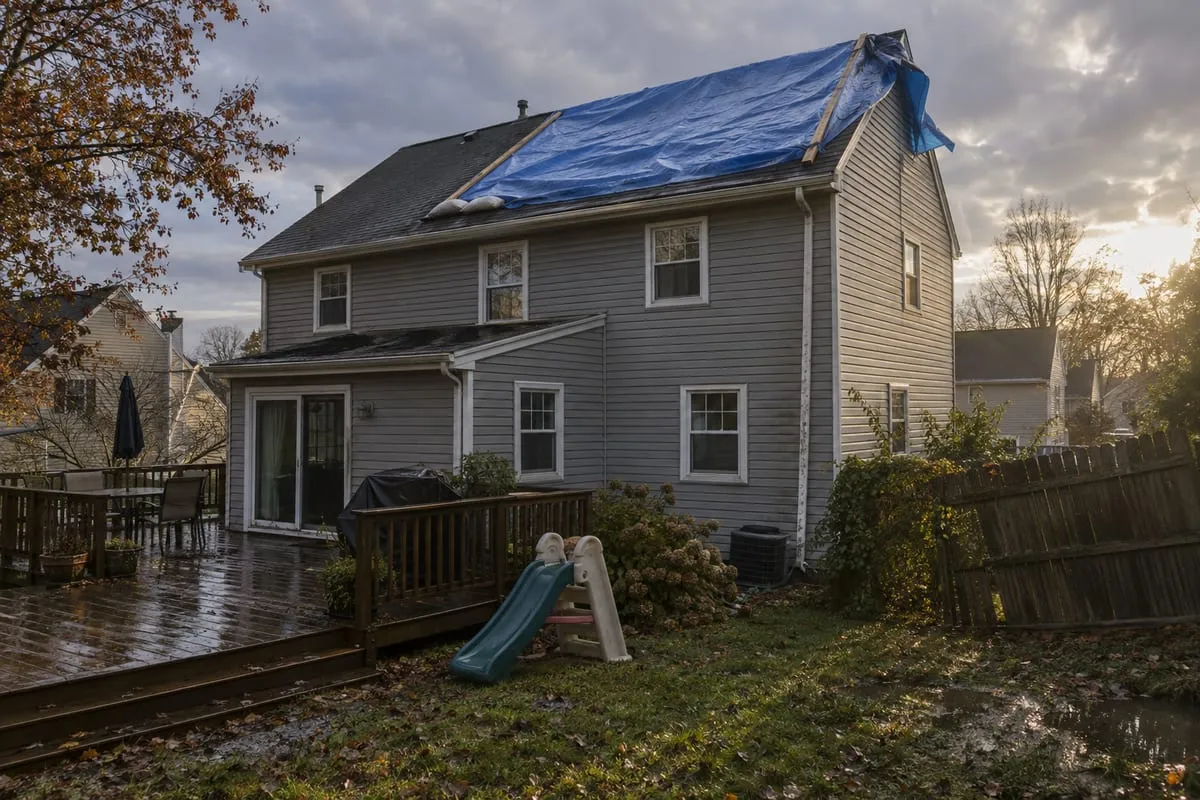 Storm DamageWind, a fallen limb, hail. Claim or no claim.
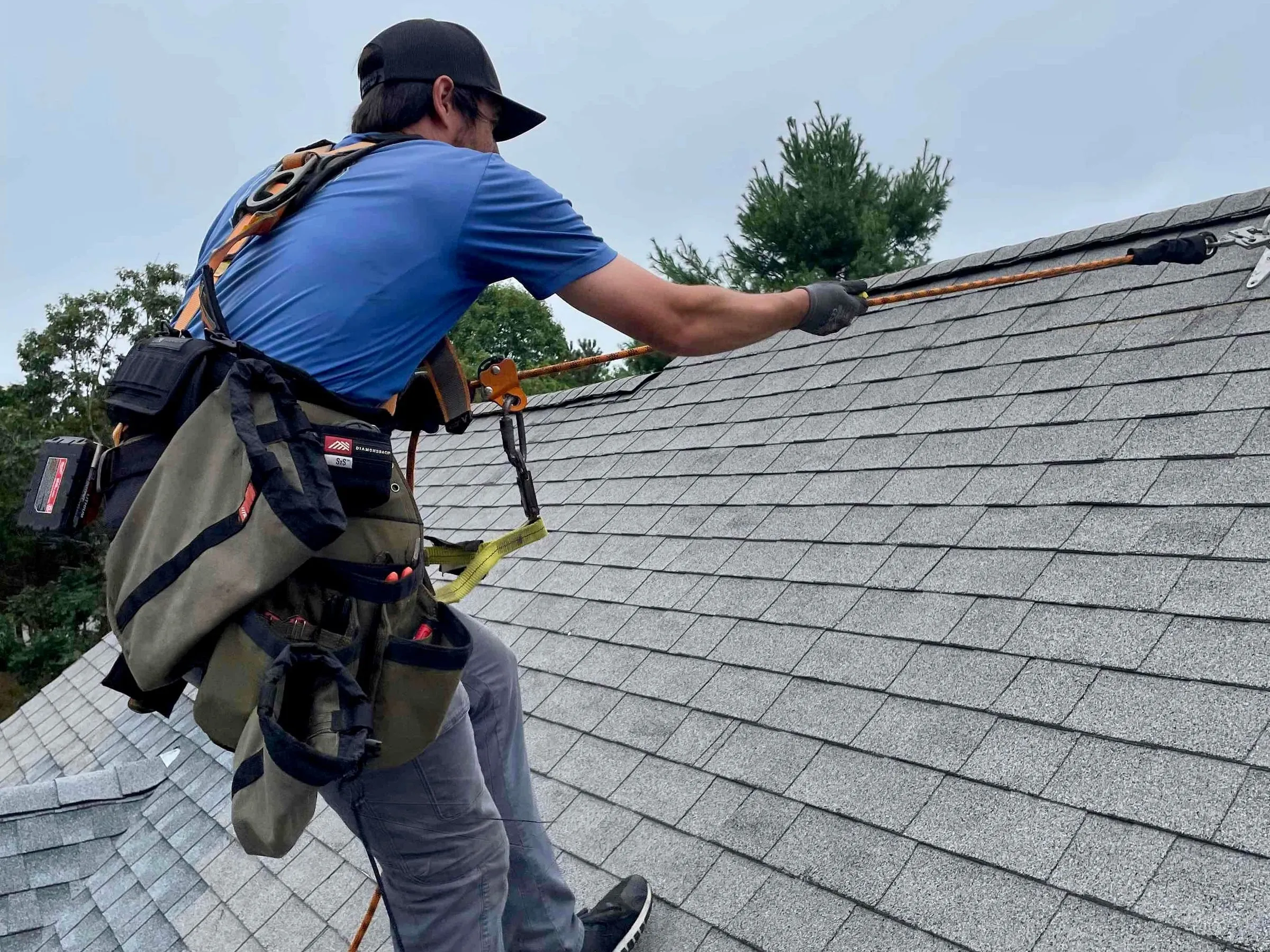 Not Sure, Need an InspectionAn inspection or a second opinion.
 Gutters, Siding or ExteriorGutters, siding, trim, windows, skylights.
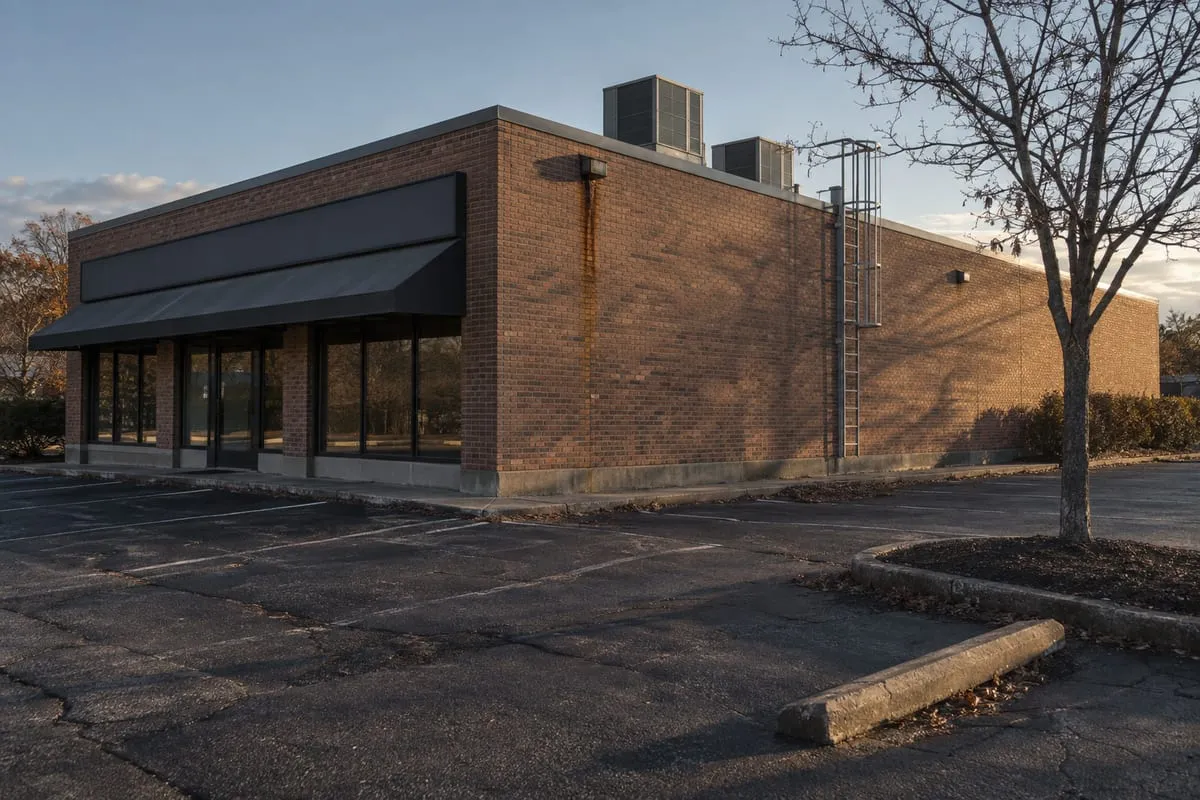 Commercial BuildingFlat or low-slope roofs, maintenance, replacement.
Where Are You Seeing It?
Pick the closest. We'll look at the rest on site.
How Old Is the Roof?
A rough guess is fine.
Have You Started an Insurance Claim?
Either way, we can take a look.
What's Behind the Inspection?
Pick the closest.
Which Part of the Exterior?
Pick the main one. Mention the rest at the end.
What Does the Building Need?
Flat and low-slope roofs included.
What Kind of Property Is It?
When Do You Want It Done?
Where Should We Reach You?
Request Sent
Reference RTP-····-····
We'll reach out from (401) 593-1512 during business hours. Need us sooner? Call that number any time.
Nothing is sent until you say so.
ContinueRather Talk?(401) 593-1512
- 5.0Google rating · 229 reviews
 GAF Master Elite® GAF Master Elite® Certified contractor, Cert. #1111816.
- BBB A+ Accredited by the Better Business Bureau since September 29, 2022.
- GC-47694 Licensed and registered general contractor in Rhode Island, valid through September 19, 2027.
- GAF Extended Warranty Extended manufacturer warranty available on qualifying installations. Coverage terms vary by product and installation.
Signs
Signs Your Commercial Roof Needs Replacing, Not Another Patch
Here's what we actually check once we're on your roof, not guessing from the parking lot:
Age
Most commercial roofing systems last 20-30 years depending on the material and how well it was installed and maintained. Near or past that range, a repair is often just delaying the same decision.
Recurring Leaks
Water stains on ceiling tiles or walls that keep coming back after repairs mean the membrane or flashing has failed in more than one spot.
Storm or Wind Damage
Torn membrane seams, lifted flashing, or debris punctures after a storm can compromise the whole roof system, not just the damaged section.
Ponding Water
Standing water more than 48 hours after a rain points to a drainage or slope problem that patching alone won't fix.
One or two of these can often be repaired or addressed through commercial roofing maintenance. Several at once, or a roof already near the end of its life, is usually a replacement conversation. If a specific storm is what brought the leak on, see storm damage and insurance claims before you decide between a repair and a full replacement.
Commercial Roofing Systems: Honest Pros and Cons
There's no single right commercial roof for every building, there's the right system for your building, budget, and how the roof is used. Here's how the main options actually compare:
TPO (Thermoplastic Polyolefin)
A single-ply membrane, usually white, with seams heat-welded rather than glued. Reflective, which helps with cooling costs, and the welded seams hold up well over time. Read more on our TPO roofing page.
EPDM (Rubber Membrane)
A proven, budget-friendly single-ply system, usually black, that's been used on commercial roofs for decades. It handles New England's freeze-thaw cycles well, but it absorbs more heat than TPO and its seams are glued rather than welded, so seam quality depends heavily on installation.
PVC
Chemically similar to TPO in how it's installed (heat-welded seams, reflective surface) but generally more resistant to chemicals, grease, and oils, which matters for restaurants and some industrial buildings. It typically costs more than TPO.
Modified Bitumen
An asphalt-based system, torch-applied or self-adhered in layers, familiar to any roofer who's worked on an older commercial building. It holds up well under foot traffic and rooftop equipment, and it's often the right call when matching an existing modified bitumen roof instead of tearing out a whole system.
Built-Up Roofing (BUR)
Multiple layers of asphalt and reinforcing fabric topped with gravel or a cap sheet. It's durable and has decades of track record, but it's heavier and generally more labor-intensive to install than a single-ply system.
We'll tell you which system actually fits your roof's slope, drainage, rooftop equipment, and how the building's used, after we've walked it, not before.
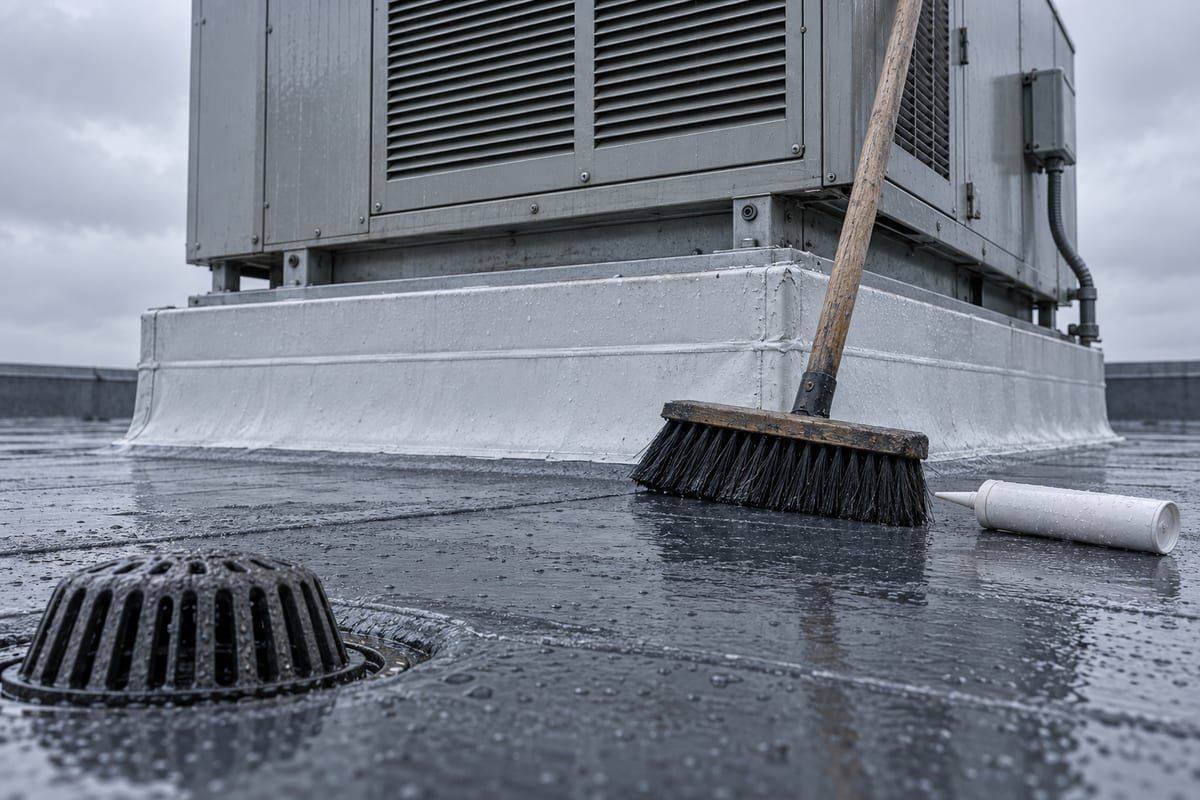
How RTP Handles a Commercial Replacement
We're a GAF Master Elite® certified contractor, RI-registered under GC-47694. We install TPO, PVC, EPDM, modified bitumen, and built-up roofing systems, and on qualifying installations we can offer GAF's Golden Pledge® Limited Warranty: up to 50 years of non-prorated coverage. Eligibility, coverage, and terms vary by product and installation; see our guide on GAF's Golden Pledge Limited Warranty, explained for what that coverage actually includes, or full details at gaf.com. See our GAF Master Elite® status for what that certification means.
On site, that means one company walks the inspection, does the tear-off, and installs the new system. We schedule around your operating hours where we can. If storm damage is part of what's driving your replacement, see our storm damage and insurance claims page for how we help document a claim.
When to Repair, When to Replace
Not every leak means a new roof. As a general guide:
- Repair usually makes sense when the damage is isolated to one area, the roof is well within its expected service life, and the rest of the membrane, flashing, and drainage are in good shape.
- Replacement usually makes sense when leaks keep recurring in different spots, the roof is near or past the 20-30 year range typical for most commercial systems, ponding water points to a drainage problem rather than a single bad seam, or a storm has damaged enough of the roof that patching it piecemeal would cost more over time than one clean replacement.
We'll give you a straight answer after inspecting your roof, including telling you when a repair is genuinely the better move. See commercial roofing maintenance for what keeps a roof in the "repair" column longer.
Cost
What a Commercial Roof Replacement Costs
There's no honest number we can give you over the phone.
Cost depends on the square footage and slope of your roof, the system you choose, how many layers have to come off, drainage and insulation work, and what we find once we're on the deck. We'll walk the real number with you after a free, on-roof inspection, not a guess from a satellite image.
How It Works
- Step 1
Inspection & Assessment
We walk the roof to check the membrane, flashing, drains, insulation, and deck condition, then explain what your roof needs in plain language before we talk systems or price.
- Step 2
System Selection
We help you choose the right commercial roofing system, TPO, PVC, EPDM, modified bitumen, or BUR, for your building, budget, and how you use the space, and explain the tradeoffs of each.
- Step 3
Tear-Off & Installation
We schedule around your operating hours where possible, remove the old roof down to the deck, address any deck or insulation issues we find, and install the new system using manufacturer-specified methods, start to finish.
- Step 4
Final Inspection & Warranty Registration
We walk the finished roof with you, confirm drainage and seams are working correctly, and register your warranty paperwork before we call the job done.
Questions
Frequently Asked Questions
How long does a commercial roof replacement take?
It depends on the size, system, and your building's schedule. We'll give you an exact timeline after our on-roof inspection, not a generic estimate, and we'll work around your business where we can.
What are the signs I need a commercial roof replacement instead of a repair?
Roof age past 20-30 years, recurring leaks after repairs, storm or wind damage, and ponding water that sits more than 48 hours are the main signs. We check all four when we inspect your roof.
Which commercial roofing system is right for my building, TPO, EPDM, or something else?
It depends on your roof's slope, drainage, rooftop equipment, and budget. TPO and PVC are reflective with welded seams, EPDM is a proven budget option, and modified bitumen or BUR can be the right call on certain buildings. We'll recommend a system after inspecting your roof, not before.
Do you offer a warranty on a commercial roof replacement?
As a GAF Master Elite® contractor, we can offer GAF's Golden Pledge® Limited Warranty on qualifying installations, up to 50 years of non-prorated coverage. Coverage and eligibility vary by product and installation, and we'll confirm exactly what applies before you sign.
Can you replace my roof without closing the building?
In most cases, yes. We plan the tear-off and installation schedule around your operating hours and walk you through what to expect before work starts.
Will you help with an insurance claim if a storm damaged my commercial roof?
If storm damage is part of what's driving the replacement, we can document what we find and help you through the claims process with your insurer. See our storm damage and insurance claims page for details.
Serving
Serving Rhode Island
- Commercial roof replacement in Barrington
- Commercial roof replacement in Bristol
- Commercial roof replacement in Burrillville
- Commercial roof replacement in Central Falls
- Commercial roof replacement in Charlestown
- Commercial roof replacement in Coventry
- Commercial roof replacement in Cranston
- Commercial roof replacement in Cumberland
- Commercial roof replacement in East Greenwich
- Commercial roof replacement in East Providence
- Commercial roof replacement in Exeter
- Commercial roof replacement in Foster
- Commercial roof replacement in Glocester
- Commercial roof replacement in Hopkinton
- Commercial roof replacement in Jamestown
- Commercial roof replacement in Johnston
- Commercial roof replacement in Lincoln
- Commercial roof replacement in Little Compton
- Commercial roof replacement in Middletown
- Commercial roof replacement in Narragansett
- Commercial roof replacement in New Shoreham
- Commercial roof replacement in Newport
- Commercial roof replacement in North Kingstown
- Commercial roof replacement in North Providence
- Commercial roof replacement in North Smithfield
- Commercial roof replacement in Pawtucket
- Commercial roof replacement in Portsmouth
- Commercial roof replacement in Providence
- Commercial roof replacement in Richmond
- Commercial roof replacement in Scituate
- Commercial roof replacement in Smithfield
- Commercial roof replacement in South Kingstown
- Commercial roof replacement in Tiverton
- Commercial roof replacement in Warren
- Commercial roof replacement in Warwick
- Commercial roof replacement in West Greenwich
- Commercial roof replacement in West Warwick
- Commercial roof replacement in Westerly
- Commercial roof replacement in Woonsocket
Serving
Serving Massachusetts
- Commercial roof replacement in Attleboro
- Commercial roof replacement in Bellingham
- Commercial roof replacement in Blackstone
- Commercial roof replacement in Bridgewater
- Commercial roof replacement in Brockton
- Commercial roof replacement in Dartmouth
- Commercial roof replacement in Easton
- Commercial roof replacement in Fall River
- Commercial roof replacement in Foxborough
- Commercial roof replacement in Franklin
- Commercial roof replacement in Mansfield
- Commercial roof replacement in Middleborough
- Commercial roof replacement in Milford
- Commercial roof replacement in New Bedford
- Commercial roof replacement in North Attleborough
- Commercial roof replacement in Norton
- Commercial roof replacement in Plymouth
- Commercial roof replacement in Rehoboth
- Commercial roof replacement in Seekonk
- Commercial roof replacement in Somerset
- Commercial roof replacement in Swansea
- Commercial roof replacement in Taunton
- Commercial roof replacement in Uxbridge
- Commercial roof replacement in Wareham
- Commercial roof replacement in Westport
- Commercial roof replacement in Worcester
Get a Straight Answer on Your Commercial Roof Replacement
Request a free, on-roof inspection or call (401) 593-1512. We'll tell you what your roof actually needs before we talk systems or price.