
Repair vs. Replacement · Rhode Island
Signs You Need Roof Repair vs. A Full Replacement
A missing shingle doesn't always mean a new roof, and a roof that looks fine from the driveway isn't always fine. Here's how we actually tell the difference, and how you can start to tell too.
Free EstimateRTP-····-···· · Warwick Office
Free Estimate
RTP-····-····Warwick Office
Step 1 of 5 · About 1 Minute
What Does Your Home Need?
Pick the closest one. You don't need the right words for it.
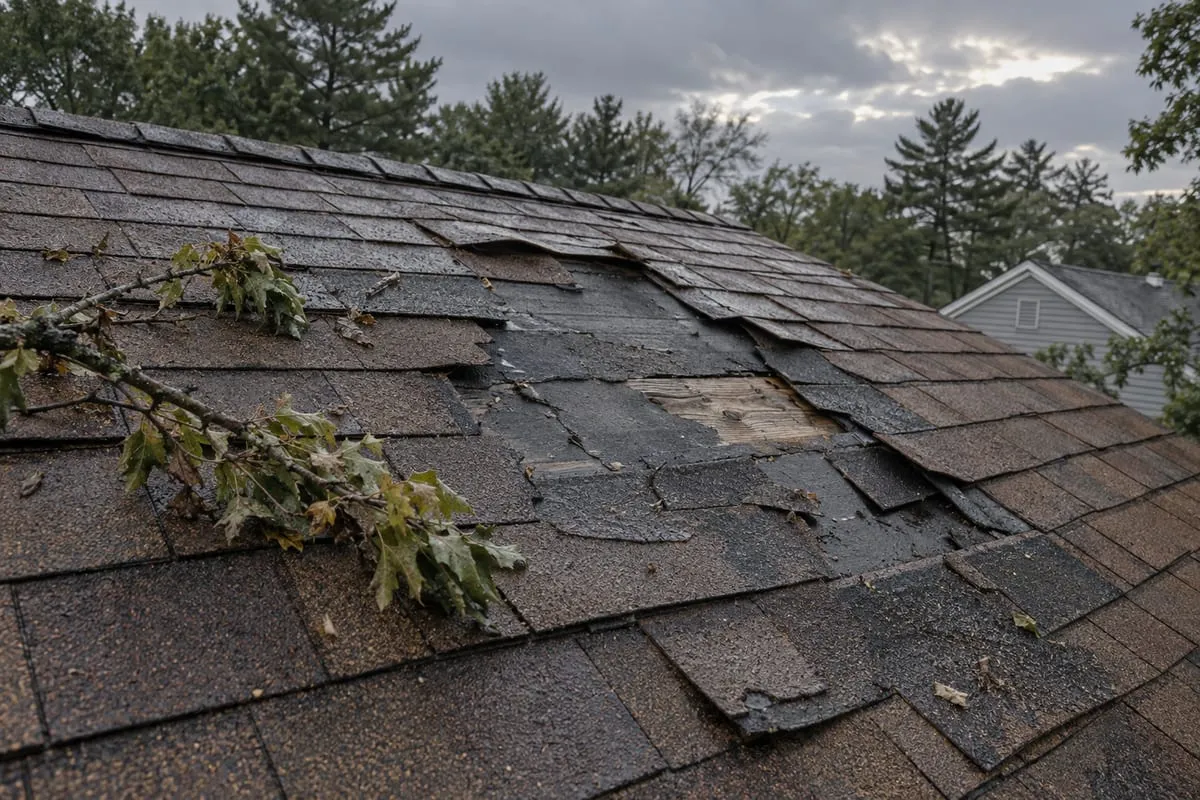 Something's Leaking or DamagedA stain on the ceiling, water in the attic, missing shingles.
 Old Roof, Weighing ReplacementCurling, bald spots, or it's just been a long time.
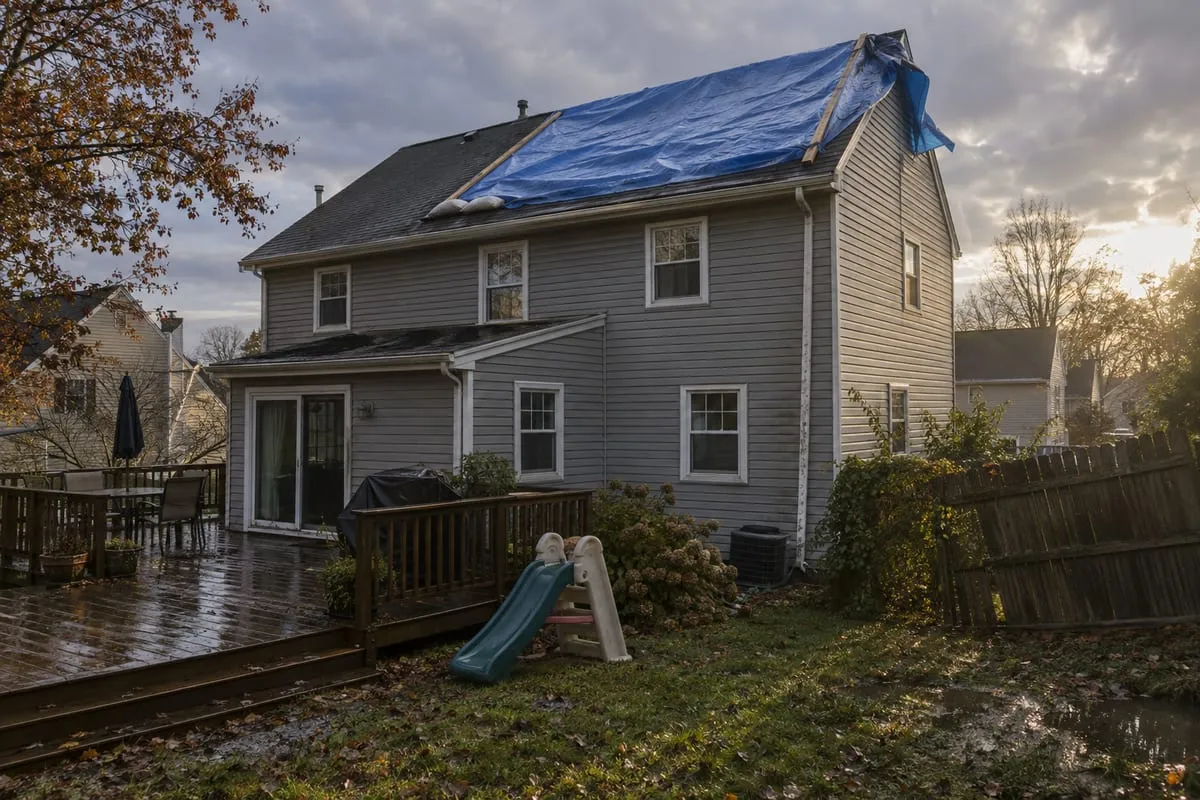 Storm DamageWind, a fallen limb, hail. Claim or no claim.
 Not Sure, Need an InspectionAn inspection or a second opinion.
 Gutters, Siding or ExteriorGutters, siding, trim, windows, skylights.
 Commercial BuildingFlat or low-slope roofs, maintenance, replacement.
Where Are You Seeing It?
Pick the closest. We'll look at the rest on site.
How Old Is the Roof?
A rough guess is fine.
Have You Started an Insurance Claim?
Either way, we can take a look.
What's Behind the Inspection?
Pick the closest.
Which Part of the Exterior?
Pick the main one. Mention the rest at the end.
What Does the Building Need?
Flat and low-slope roofs included.
What Kind of Property Is It?
When Do You Want It Done?
Where Should We Reach You?
Request Sent
Reference RTP-····-····
We'll reach out from (401) 593-1512 during business hours. Need us sooner? Call that number any time.
Nothing is sent until you say so.
ContinueRather Talk?(401) 593-1512
- GAF Master Elite®
GAF Master Elite® Certified contractor, Cert. #1111816.
- BBB A+
Accredited by the Better Business Bureau since September 29, 2022.
- GC-47694
Licensed and registered general contractor in Rhode Island, valid through September 19, 2027.
- GAF Extended Warranty
Extended manufacturer warranty available on qualifying installations. Coverage terms vary by product and installation.
Why This Call Is Easy To Get Wrong
Homeowners usually hear one of two things: a contractor who wants to sell a full replacement for a problem a repair would fix, or a contractor who patches around a roof that's actually done. Both cost you money in the wrong direction. The real answer depends on the roof's age, how much of it is affected, and what's happening underneath the shingles, not on how the roof looks from the yard.
The short version: isolated damage on a roof with life left in it is usually a repair. Widespread wear, a roof near the end of its expected lifespan, or damage stacked on top of an already-aging system usually points to replacement. Below is how to sort your situation into one bucket or the other, and what we actually check when we're the ones making the call.
Signs That Usually Mean A Repair
These point to a fix, not a full roof:
- A handful of missing or damaged shingles. Wind or age can take out a section without compromising the roof system around it.
- One active leak with a traceable source. A single stain that lines up with a specific flashing detail, vent, or chimney is usually a targeted fix, not a sign the whole roof has failed.
- A roof under 15 years old with no widespread wear. Younger roofs with isolated damage are strong repair candidates, especially if the rest of the shingle field is intact.
- Storm damage limited to one slope or section. Hail or wind can hit one side of a roof harder than the rest; that doesn't always mean replacing sides that weren't touched.
- Flashing failures around chimneys, skylights, or vents. This is one of the most common sources of a leak that looks worse than it is, and it's almost always repairable.
If your situation matches these, a roof repair is the more likely outcome. We'll still confirm it on the roof before saying so.
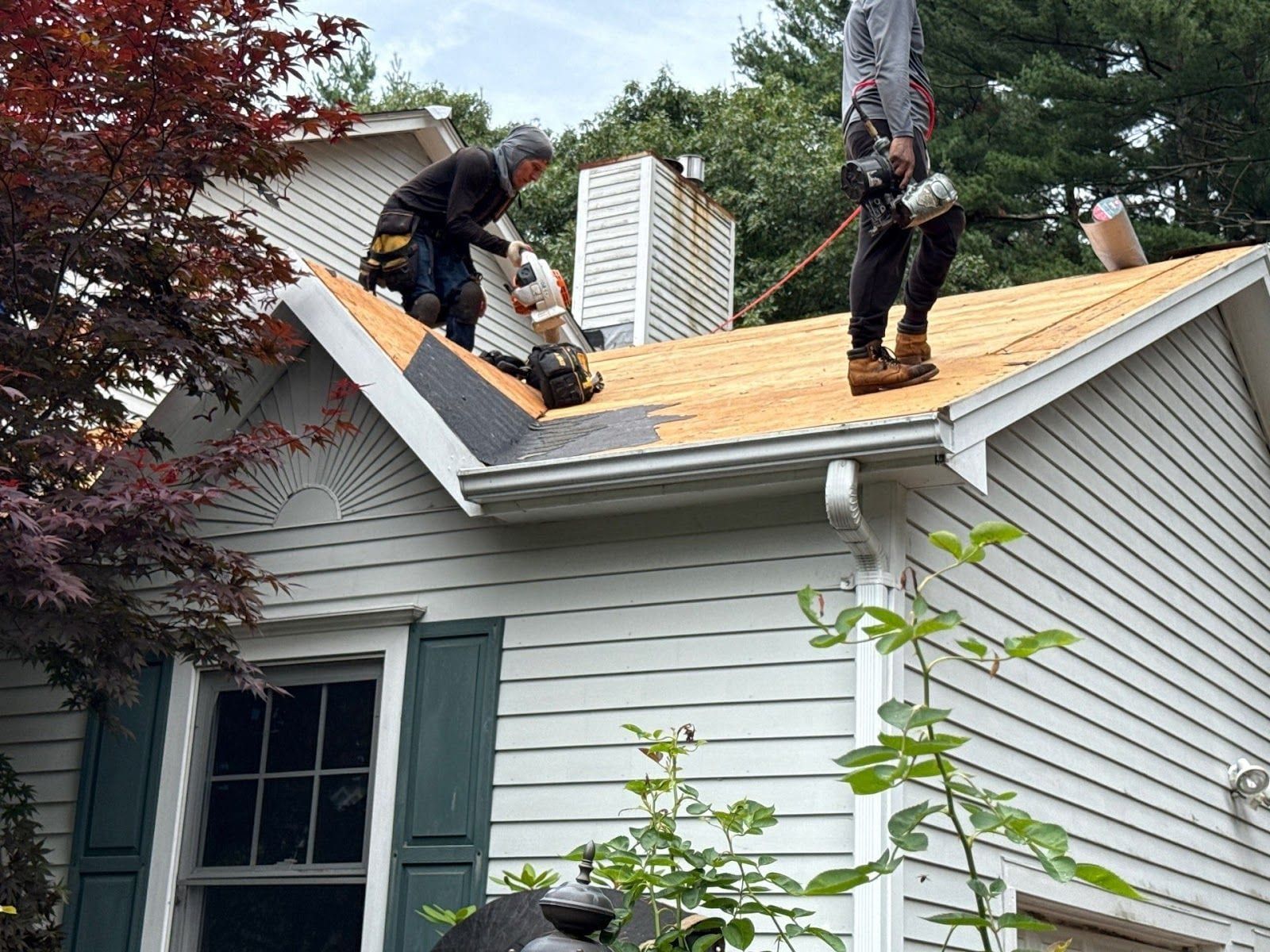
Signs That Usually Mean Replacement
These point toward a full roof, not a patch:
- The roof is near or past its expected 20-30 year lifespan for asphalt shingles. Age alone doesn't decide it, but it changes what a repair is actually buying you.
- Shingles are curling, cupping, or losing granules across large sections, not just in one spot. That's the shingle material itself wearing out, not a localized failure.
- Multiple leaks in different areas of the roof, especially if they showed up around the same time. That usually means the underlayment or decking is failing broadly, not just one flashing detail.
- Visible sagging in the roofline or decking. This can signal structural or moisture damage underneath and needs to be evaluated in the attic, not just from the outside.
- You've already had two or more repairs in the last few years for unrelated issues. At some point, the cost of chasing individual failures on an aging roof passes the cost of a system that isn't failing piece by piece.
- Daylight visible through the roof boards from the attic, or soft, spongy decking underfoot. Both mean water has been getting in longer than the outside suggests.
If several of these apply, ask about roof replacement rather than another round of patching.
What We Actually Check Before Making The Call
We don't make this call from the driveway or off a photo. A real assessment covers:
- The shingle field itself, for curling, cupping, granule loss, and how consistent the wear is across the whole roof versus isolated to one area.
- Flashing around chimneys, vents, and skylights, since flashing failures get blamed on "the roof" far more often than they're actually a roof-wide problem.
- The attic and decking, for moisture, staining, daylight through the boards, or soft spots that tell us how far water intrusion has actually gone.
- Gutters and drainage, since granule buildup in the gutters is often the clearest sign of how much a shingle field has actually worn down.
This is the same process we use for a standalone roof inspection, and it's always free. We'll walk you through exactly what we found and which side of the repair-versus-replacement line your roof actually falls on, in plain language.
If The Damage Followed A Storm
Storm damage complicates the repair-versus-replacement call because wind and hail can lift shingle edges or strip granules in ways that are nearly invisible from the ground but very visible once we're up there. If your damage followed a specific storm and you're weighing whether it's worth an insurance claim, our storm damage and insurance claims page covers how that process works alongside the repair-or-replace decision.
How Cost And Warranty Fit Into The Decision
There's no honest repair-versus-replacement number over the phone, since it depends entirely on what we actually find on your roof; our guide on what drives the cost of a roof replacement in Rhode Island covers the factors that move that number either way. What we can tell you upfront: repairs on a GAF system are made with GAF-specified materials so they don't void coverage on qualifying installations, and as a GAF Master Elite® contractor, we can offer GAF's enhanced warranties, including the Golden Pledge® Limited Warranty with up to 50 years of non-prorated coverage, on qualifying replacement installations. See our guide on GAF's Golden Pledge Limited Warranty, explained for what that actually covers; eligibility, coverage, and terms vary by product and installation, with full details at gaf.com. We'll tell you which options actually apply to your roof once we've seen it, not before.
Planning solar with your new roof? See how roof replacement and solar together work with Rooftop Power, the company behind RTP Roofing.
Questions
Frequently asked questions
Can a roof be half-repaired and half-replaced?
Not really, at least not in the sense of replacing one slope and repairing another long-term. Roofs are built and warrantied as a system, so a full replacement covers the whole roof at once. What can happen is a repair now, on a roof that's still sound overall, with replacement planned for later as the roof approaches the end of its life.
How much of a roof needs damage before it's a replacement instead of a repair?
There's no fixed percentage. A small, older roof with damage on one slope might already be a replacement conversation if the rest of the shingle field is worn out; a large roof with damage on one section might still be a straightforward repair. It comes down to overall condition, not just the size of the visibly damaged area.
Is it cheaper to keep repairing an old roof instead of replacing it?
Sometimes, for a while. But once a roof is old enough to need recurring, unrelated repairs, each fix is buying you less time than the last one, and the total of several repairs can end up costing more than a planned replacement would have.
Does insurance ever cover a roof replacement instead of a repair?
It depends on the cause of damage and your policy. Storm-related damage is the most common path to an insurance-covered replacement. See our storm damage and insurance claims page, or call us and we'll tell you what we're seeing on your roof before you file anything.
How do I know if it's actually time, without paying for an inspection I don't need?
Our inspections are always free, so getting an answer doesn't cost you anything. If you're seeing more than one of the replacement signs above, curling shingles across the roof, more than one leak, visible sagging, that's usually enough reason to get someone on the roof rather than wait.
Will you push a replacement if my roof just needs a repair?
No. We're a GAF Master Elite contractor, and we'll tell you honestly which one your roof needs. Plenty of the roofs we look at need a repair, not a replacement, and we say so.
Serving Rhode Island
- Signs you need roof repair vs. a full replacement in Barrington
- Signs you need roof repair vs. a full replacement in Bristol
- Signs you need roof repair vs. a full replacement in Burrillville
- Signs you need roof repair vs. a full replacement in Central Falls
- Signs you need roof repair vs. a full replacement in Charlestown
- Signs you need roof repair vs. a full replacement in Coventry
- Signs you need roof repair vs. a full replacement in Cranston
- Signs you need roof repair vs. a full replacement in Cumberland
- Signs you need roof repair vs. a full replacement in East Greenwich
- Signs you need roof repair vs. a full replacement in East Providence
- Signs you need roof repair vs. a full replacement in Exeter
- Signs you need roof repair vs. a full replacement in Foster
- Signs you need roof repair vs. a full replacement in Glocester
- Signs you need roof repair vs. a full replacement in Hopkinton
- Signs you need roof repair vs. a full replacement in Jamestown
- Signs you need roof repair vs. a full replacement in Johnston
- Signs you need roof repair vs. a full replacement in Lincoln
- Signs you need roof repair vs. a full replacement in Little Compton
- Signs you need roof repair vs. a full replacement in Middletown
- Signs you need roof repair vs. a full replacement in Narragansett
- Signs you need roof repair vs. a full replacement in New Shoreham
- Signs you need roof repair vs. a full replacement in Newport
- Signs you need roof repair vs. a full replacement in North Kingstown
- Signs you need roof repair vs. a full replacement in North Providence
- Signs you need roof repair vs. a full replacement in North Smithfield
- Signs you need roof repair vs. a full replacement in Pawtucket
- Signs you need roof repair vs. a full replacement in Portsmouth
- Signs you need roof repair vs. a full replacement in Providence
- Signs you need roof repair vs. a full replacement in Richmond
- Signs you need roof repair vs. a full replacement in Scituate
- Signs you need roof repair vs. a full replacement in Smithfield
- Signs you need roof repair vs. a full replacement in South Kingstown
- Signs you need roof repair vs. a full replacement in Tiverton
- Signs you need roof repair vs. a full replacement in Warren
- Signs you need roof repair vs. a full replacement in Warwick
- Signs you need roof repair vs. a full replacement in West Greenwich
- Signs you need roof repair vs. a full replacement in West Warwick
- Signs you need roof repair vs. a full replacement in Westerly
- Signs you need roof repair vs. a full replacement in Woonsocket
Serving Massachusetts
- Signs you need roof repair vs. a full replacement in Attleboro
- Signs you need roof repair vs. a full replacement in Bellingham
- Signs you need roof repair vs. a full replacement in Blackstone
- Signs you need roof repair vs. a full replacement in Bridgewater
- Signs you need roof repair vs. a full replacement in Brockton
- Signs you need roof repair vs. a full replacement in Dartmouth
- Signs you need roof repair vs. a full replacement in Easton
- Signs you need roof repair vs. a full replacement in Fall River
- Signs you need roof repair vs. a full replacement in Foxborough
- Signs you need roof repair vs. a full replacement in Franklin
- Signs you need roof repair vs. a full replacement in Mansfield
- Signs you need roof repair vs. a full replacement in Middleborough
- Signs you need roof repair vs. a full replacement in Milford
- Signs you need roof repair vs. a full replacement in New Bedford
- Signs you need roof repair vs. a full replacement in North Attleborough
- Signs you need roof repair vs. a full replacement in Norton
- Signs you need roof repair vs. a full replacement in Plymouth
- Signs you need roof repair vs. a full replacement in Rehoboth
- Signs you need roof repair vs. a full replacement in Seekonk
- Signs you need roof repair vs. a full replacement in Somerset
- Signs you need roof repair vs. a full replacement in Swansea
- Signs you need roof repair vs. a full replacement in Taunton
- Signs you need roof repair vs. a full replacement in Uxbridge
- Signs you need roof repair vs. a full replacement in Wareham
- Signs you need roof repair vs. a full replacement in Westport
- Signs you need roof repair vs. a full replacement in Worcester
Related pages
- Roof inspector Providence RI
- Roof repair Cranston RI
- Roofing contractor Warwick RI
- Wind damage roof repair RI
- Roof maintenance Warwick RI
- Roof replacement cost Rhode Island
- GAF master elite warranty
- Roof insurance claim process RI
- Metal roof vs shingle roof Rhode Island
- Best time of year to replace a roof
- Flat roof leak repair
- Roof lifespan
- How to remove ice dams
Back to Roofing guides in Rhode Island
Not Sure Which One Your Roof Needs?
Request a free, on-roof inspection or call (401) 593-1512. We'll tell you honestly whether it's a repair, a replacement, or neither, before we talk price.