
Siding · Warwick & Rhode Island
Siding Installation in Warwick, RI
Faded, warped siding that makes a well-kept house look neglected. Cold air finding its way in around every seam. Rhode Island homeowners call RTP Roofing when the exterior needs more than a patch.
Free EstimateRTP-····-···· · Warwick Office
Free Estimate
RTP-····-····Warwick Office
Step 1 of 5 · About 1 Minute
What Does Your Home Need?
Pick the closest one. You don't need the right words for it.
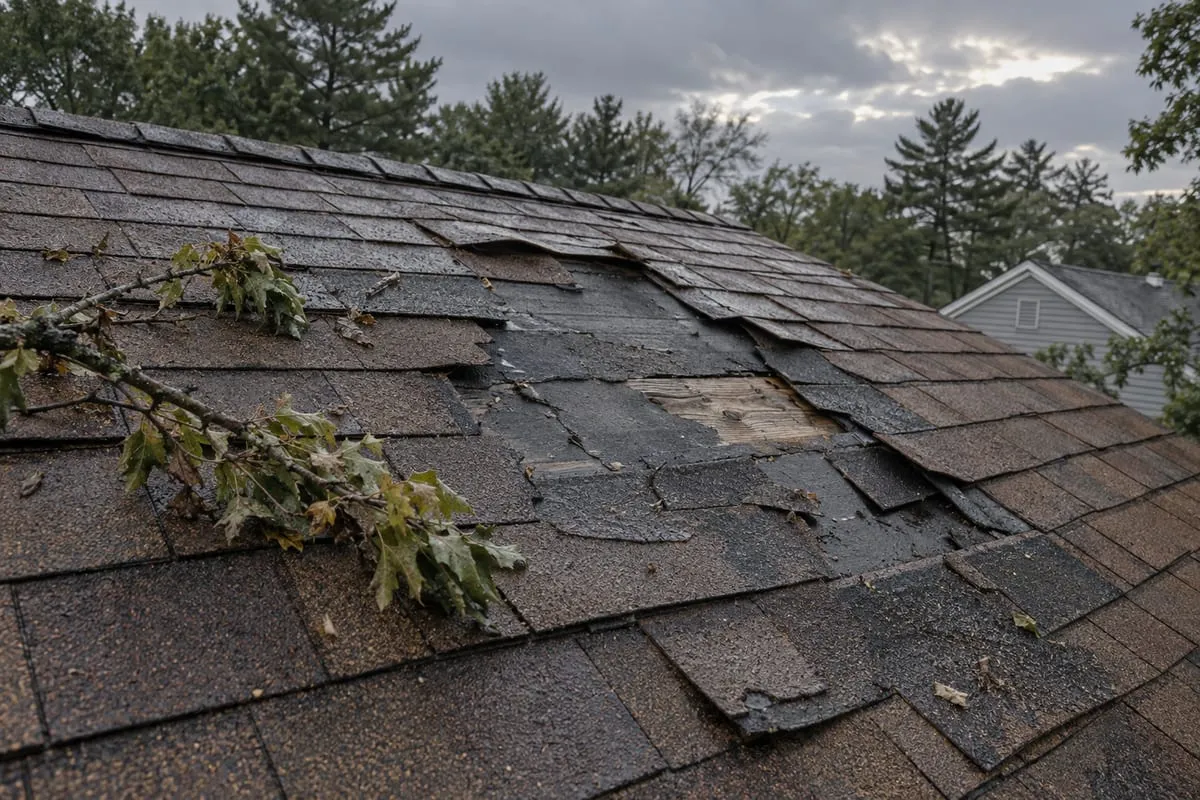 Something's Leaking or DamagedA stain on the ceiling, water in the attic, missing shingles.
 Old Roof, Weighing ReplacementCurling, bald spots, or it's just been a long time.
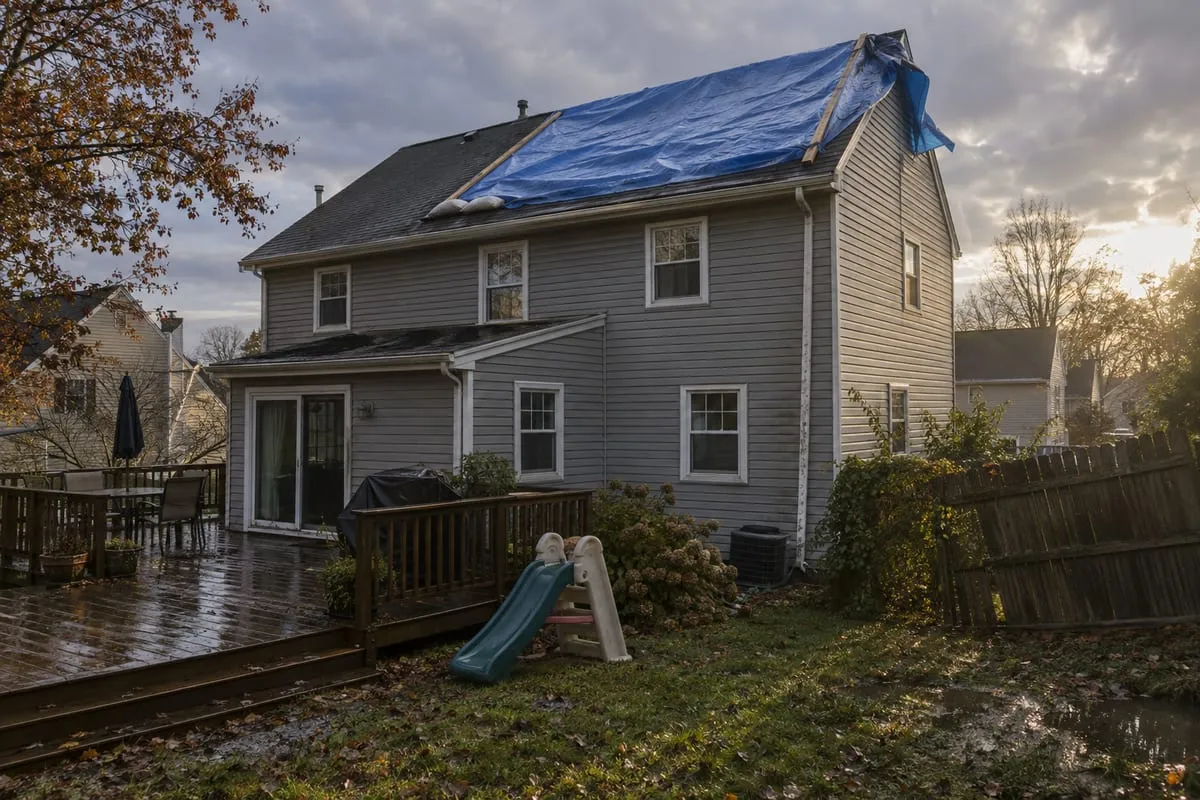 Storm DamageWind, a fallen limb, hail. Claim or no claim.
 Not Sure, Need an InspectionAn inspection or a second opinion.
 Gutters, Siding or ExteriorGutters, siding, trim, windows, skylights.
 Commercial BuildingFlat or low-slope roofs, maintenance, replacement.
Where Are You Seeing It?
Pick the closest. We'll look at the rest on site.
How Old Is the Roof?
A rough guess is fine.
Have You Started an Insurance Claim?
Either way, we can take a look.
What's Behind the Inspection?
Pick the closest.
Which Part of the Exterior?
Pick the main one. Mention the rest at the end.
What Does the Building Need?
Flat and low-slope roofs included.
What Kind of Property Is It?
When Do You Want It Done?
Where Should We Reach You?
Request Sent
Reference RTP-····-····
We'll reach out from (401) 593-1512 during business hours. Need us sooner? Call that number any time.
Nothing is sent until you say so.
ContinueRather Talk?(401) 593-1512
- GAF Master Elite
GAF Master Elite® Certified contractor, Cert. #1111816.
- BBB A+
Accredited by the Better Business Bureau since September 29, 2022.
- RI GC-47694
Licensed and registered general contractor in Rhode Island, valid through September 19, 2027.
- GAF Golden Pledge
Extended manufacturer warranty available on qualifying installations. Coverage terms vary by product and installation.
What Worn Siding Is Actually Costing You
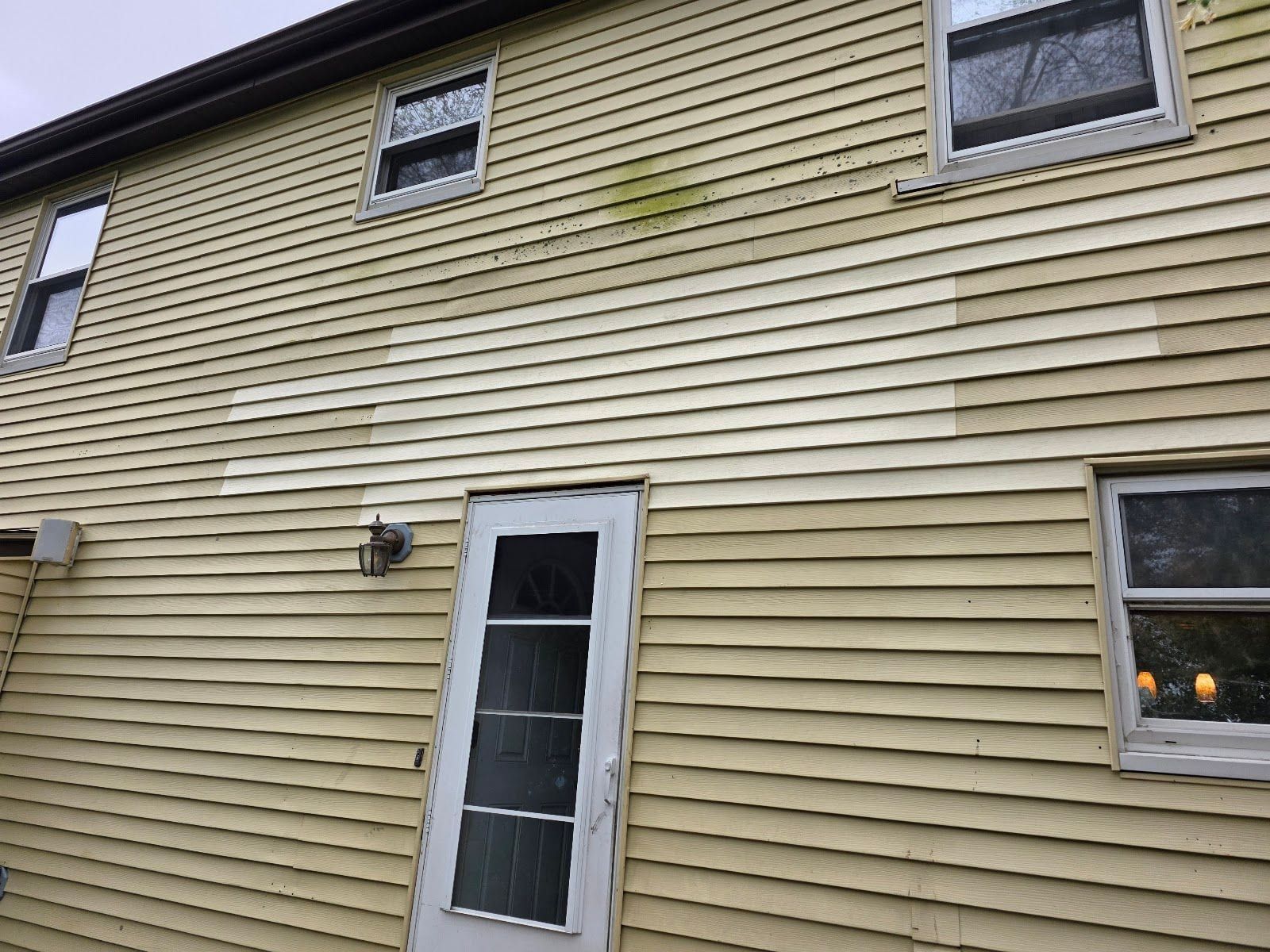
Siding isn't just the outside of your house, it's the barrier between Rhode Island's weather and your home's structure. When it's failing, three things usually follow: higher heating and cooling bills as insulation gaps widen, moisture working behind the wall where you can't see it, and a home that looks worse than its actual condition warrants.
We install siding as part of the same exterior work we do on roof replacements, which means the company that flashes your roof correctly also ties your siding into it, not two contractors guessing at how their work meets. If it's isolated damage rather than a full re-side, see our siding repair page instead.
Siding Materials We Install: Honest Tradeoffs
There's no single right siding material for every house, only the one that fits your climate exposure and how much upkeep you want to take on. Here's how the three we install compare:
- Vinyl siding. The most budget-friendly and lowest-maintenance option, available in a wide range of colors and profiles.
- Fiber cement siding. More durable and more fire-resistant than vinyl, with a look closer to painted wood.
- Wood siding. The classic, natural look some older Rhode Island homes call for, with more upkeep than vinyl or fiber cement.
We'll walk you through which material fits your home, your maintenance appetite, and the look you're after, not just push whatever's easiest to install.
What Actually Happens During A Siding Installation
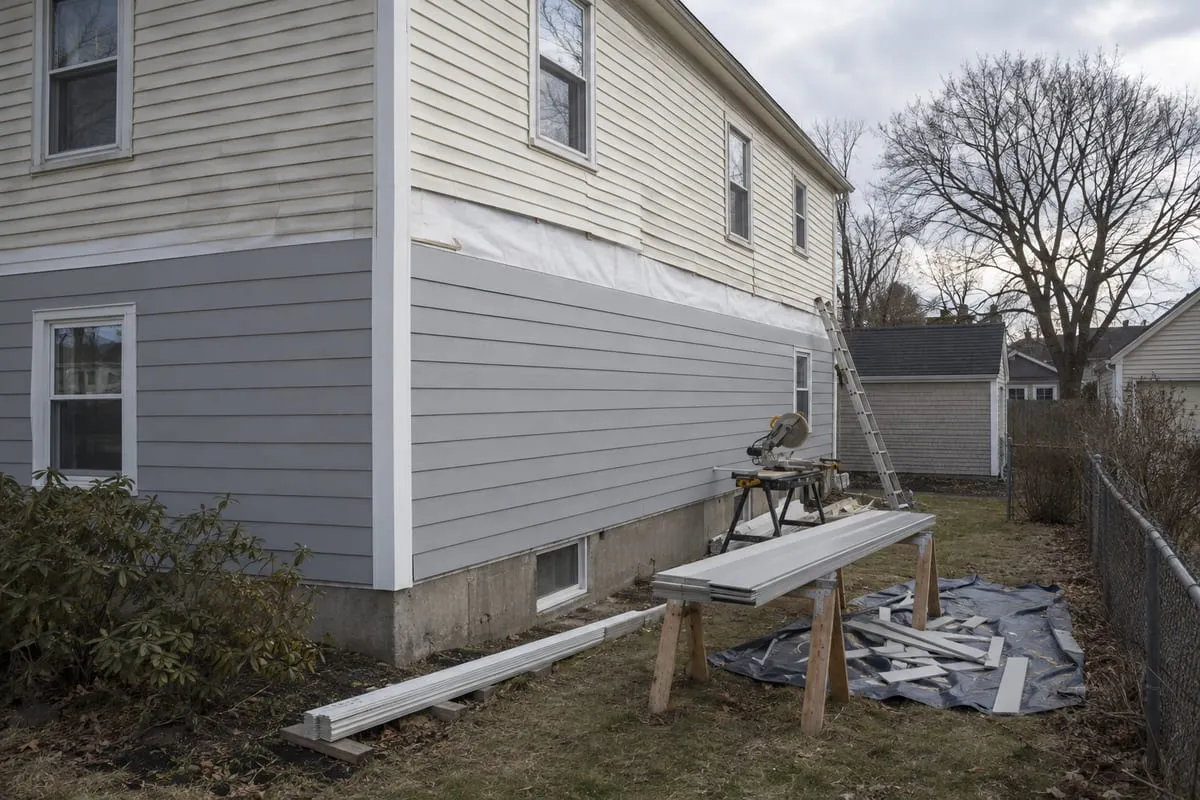
The part of a siding job that determines whether it lasts is the part you won't see once it's done. Here's what a proper installation involves:
- Tear-off and inspection. Old siding comes off so we can inspect the wood sheathing underneath for hidden rot, insect damage, or soft spots before anything new goes up.
- Weather barrier. We install a breathable house wrap over the sheathing that blocks wind-driven rain from reaching the wood frame while still letting interior moisture escape outward, instead of trapping it in the wall.
- Flashing and sealing. Windows, doors, and every point where the wall meets the roofline get flashed and sealed before a single panel goes up. Improperly flashed openings are one of the most common causes of hidden water damage behind new siding.
- Panel installation. Panels are hung, not nailed tight, with room to expand and contract with Rhode Island's temperature swings between seasons. Fastened too tight, panels can warp and look wavy over time.
- Trim, cleanup, and walkthrough. We finish trim around openings, haul away the old material and job-site debris, and walk the finished exterior with you before we call it done.
The RTP Roofing Difference
We're RI-registered (GC-47694), and the job covers every step, inspection, tear-off, house wrap, installation, and cleanup. Because siding and roofing meet at the same flashing points around dormers, gables, and roof-to-wall transitions, having one contractor handle both means fewer places for water to find a gap and one company accountable for how the two systems tie together. It's also why homeowners commonly pair a re-side with gutter replacement, since both tie into the same roofline.
Signs It's Time For New Siding, Not Another Repair
A few isolated cracked panels are usually a repair. Widespread warping, fading across multiple walls, or moisture damage showing up behind more than one section is usually a sign the whole run has reached the end of its life. Here's what we look for on inspection:
- Soft spots when pressed. Siding that gives or feels spongy usually means moisture has already gotten behind it.
- Gaps and separation. Panels pulling away from the wall or from each other let wind-driven rain in behind the siding.
- Widespread fading or chalking. Uneven color across the whole house, especially on south- and west-facing walls, points to material breaking down, not just dirt.
We'll tell you honestly which side of that line your home is on before we recommend a full re-side.
How it works
- Step 1
Inspection & Consultation
We assess your current siding and the wall and roof flashing it ties into, then talk through material options for your home and budget.
- Step 2
Material Selection
You choose the siding material, color, and profile, and we confirm quantities and installation details before ordering.
- Step 3
Installation
We tear off the old siding, inspect the sheathing underneath, install a breathable house wrap, and hang the new system, paying close attention to how it ties into roof flashing, windows, and trim.
- Step 4
Final Walkthrough
We walk the finished exterior with you and confirm every seam, corner, and flashing point is sealed correctly.
Questions
Frequently asked questions
How long does siding installation take?
It depends on the size of your home and the material you choose. We'll give you a real timeline after we've inspected your home, not a generic estimate.
What siding material fits a Rhode Island home?
It depends on your priorities. Vinyl is the most budget-friendly and low-maintenance option, fiber cement holds up well to coastal weather, and wood offers a classic look with more upkeep. We'll help you weigh the tradeoffs.
Can you install siding at the same time as a roof replacement?
Yes, and it's a common pairing since both projects involve the same scaffolding, flashing points, and crew.
Do you repair siding instead of replacing the whole exterior?
Yes, see our siding repair page for damaged sections that don't need a full replacement.
Will new siding help with drafts and energy bills?
Properly installed siding, paired with the house wrap and insulation behind it, helps close the gaps that let cold air in. We'll assess your wall assembly, not just the surface material, during inspection.
Do you handle the trim and flashing around windows and doors during a siding job?
Yes. Trim and flashing around openings are where a lot of siding leaks actually start, so we address them as part of the installation, not as a separate add-on.
What happens to the wall behind my old siding during installation?
We tear off the old siding first so we can inspect the wood sheathing underneath for rot or hidden moisture damage, then install a breathable house wrap before any new panels go up.
Serving Rhode Island
- Siding installation in Barrington
- Siding installation in Bristol
- Siding installation in Burrillville
- Siding installation in Central Falls
- Siding installation in Charlestown
- Siding installation in Coventry
- Siding installation in Cranston
- Siding installation in Cumberland
- Siding installation in East Greenwich
- Siding installation in East Providence
- Siding installation in Exeter
- Siding installation in Foster
- Siding installation in Glocester
- Siding installation in Hopkinton
- Siding installation in Jamestown
- Siding installation in Johnston
- Siding installation in Lincoln
- Siding installation in Little Compton
- Siding installation in Middletown
- Siding installation in Narragansett
- Siding installation in New Shoreham
- Siding installation in Newport
- Siding installation in North Kingstown
- Siding installation in North Providence
- Siding installation in North Smithfield
- Siding installation in Pawtucket
- Siding installation in Portsmouth
- Siding installation in Providence
- Siding installation in Richmond
- Siding installation in Scituate
- Siding installation in Smithfield
- Siding installation in South Kingstown
- Siding installation in Tiverton
- Siding installation in Warren
- Siding installation in Warwick
- Siding installation in West Greenwich
- Siding installation in West Warwick
- Siding installation in Westerly
- Siding installation in Woonsocket
Serving Massachusetts
- Siding installation in Attleboro
- Siding installation in Bellingham
- Siding installation in Blackstone
- Siding installation in Bridgewater
- Siding installation in Brockton
- Siding installation in Dartmouth
- Siding installation in Easton
- Siding installation in Fall River
- Siding installation in Foxborough
- Siding installation in Franklin
- Siding installation in Mansfield
- Siding installation in Middleborough
- Siding installation in Milford
- Siding installation in New Bedford
- Siding installation in North Attleborough
- Siding installation in Norton
- Siding installation in Plymouth
- Siding installation in Rehoboth
- Siding installation in Seekonk
- Siding installation in Somerset
- Siding installation in Swansea
- Siding installation in Taunton
- Siding installation in Uxbridge
- Siding installation in Wareham
- Siding installation in Westport
- Siding installation in Worcester
Back to Exterior services Warwick RI
Get A Straight Answer On Your Siding
Request a free estimate or call (401) 593-1512. We'll tell you what your siding needs before we talk materials or price.