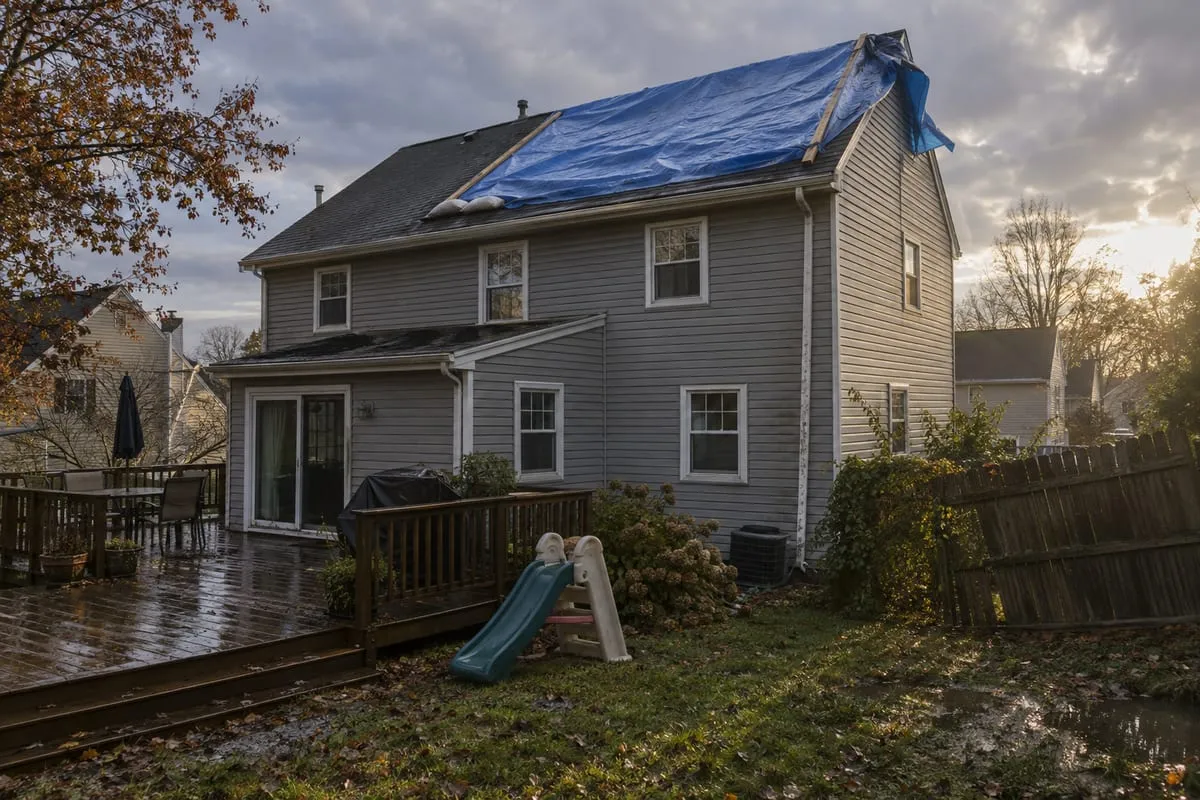


The roof has been fine through a dozen ordinary rains. Then a nor'easter comes through, the wind pushes the rain sideways for a few hours, and a brown ring shows up on the dining room ceiling. By the next morning the sun is out and the ring is the only evidence anything happened.
A leak that appears only in heavy or wind-driven rain is a useful clue. It means the roof sheds water fine under normal conditions and fails at a specific weak point under pressure. That is easier to find than a roof that leaks every time it drizzles, if you know what to write down and where to look.
Why Some Leaks Show Up Only in Storms
Shingles shed water the way a coat does: overlapping layers, each one carrying water down onto the one below. That works when rain falls straight down. Wind changes the direction. Rain is pushed sideways and can be driven up under the edge of a shingle, behind the flashing on a chimney or a wall, or into a vent that is dry in ordinary weather.
Volume does the same thing from another direction. In a downpour, water arrives faster than gutters and valleys can move it. It backs up, spreads, and finds the one detail that was never quite sealed.
So a storm-only leak usually points to an edge, a joint or something that passes through the roof, not the open field of shingles. If you have not read it yet, our roof leak repair guide covers what to do in the first hour once water is coming in. This post is about the other case: the leak that shows up rarely and is gone by morning.
The Usual Suspects
These are the places a roofer checks first.
Flashing at Walls, Chimneys and Skylights
Flashing is the metal that seals the joint where a roof meets something vertical. Over years it rusts, bends, pulls loose or loses its sealant. In calm rain the water runs past it. In wind, the water is pushed behind it. If the leak shows up near a chimney or where a dormer or an addition meets the main roof, this is the first thing to check.
Pipe Boots and Roof Vents
The rubber collar around a plumbing vent cracks and dries out with age. A ridge vent or box vent that is fine in light rain can let water in when wind-driven rain hits it from the wrong angle. Both are small parts that are easy to overlook.
Valleys and Debris
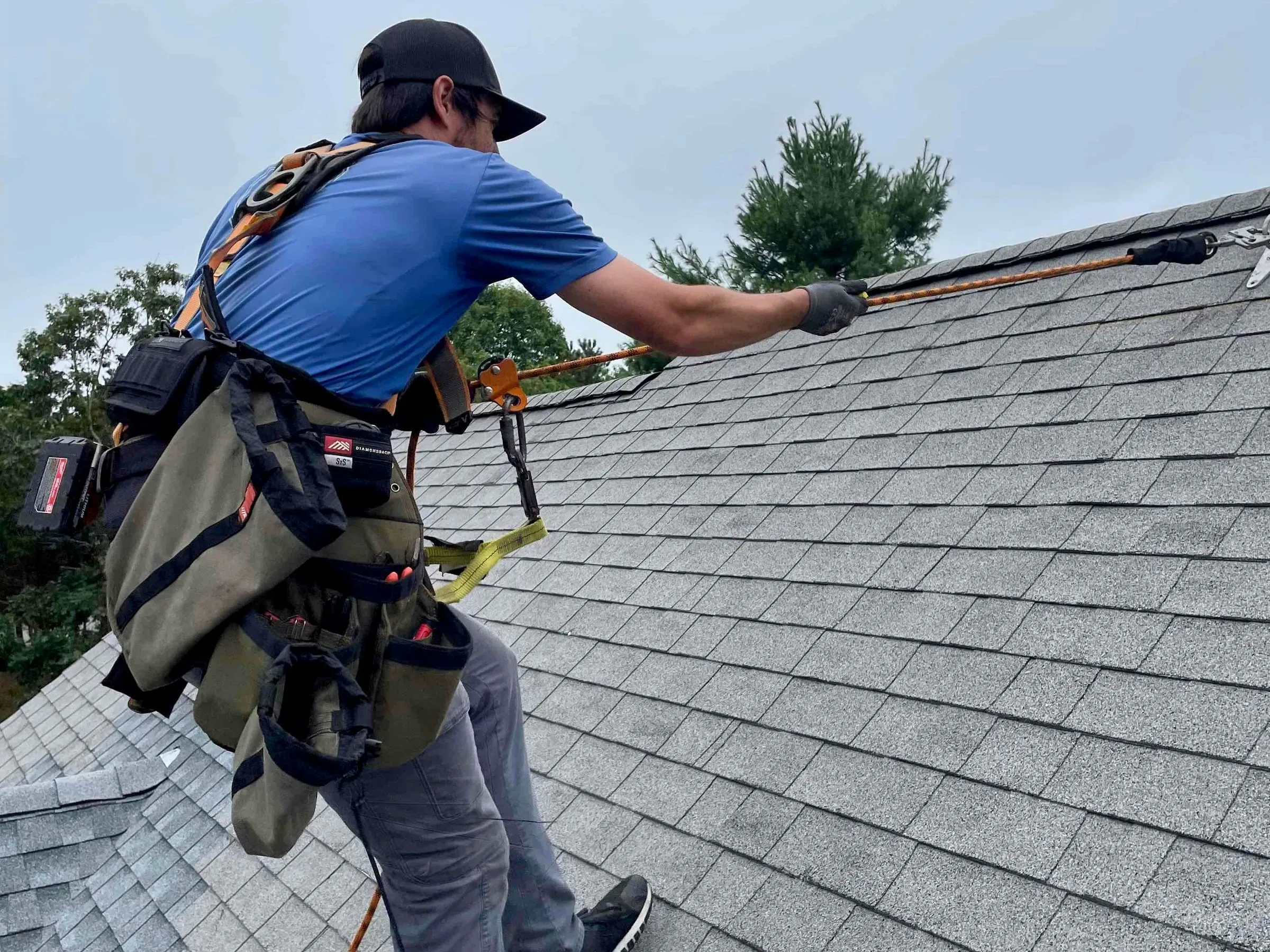
A valley is where two slopes meet, and it carries water from both. Leaves and needles pile up in it, form a small dam, and send water sideways under the shingles. This is common under big trees. A roofer clears it safely; you should not be up there doing it.
Lifted or Damaged Shingles
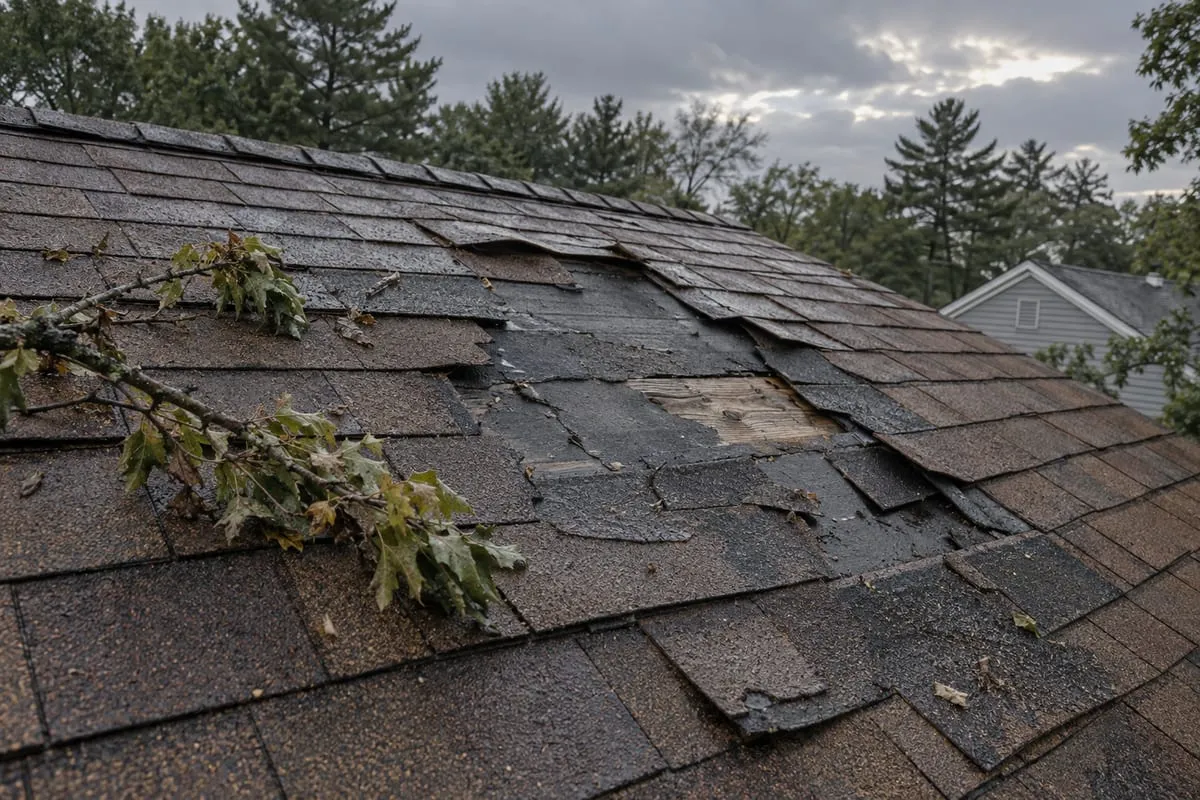
A shingle whose seal has broken can sit flat in still air and lift in wind. Rain gets under it only when the wind opens it. After a storm you may see a corner folded back or a few shingles in the yard, which is worth looking for from the ground.
Gutters That Overflow
When a gutter fills faster than it drains, water can spill back over the top and into the soffit and the wall behind. That can look exactly like a roof leak on the ceiling below. Look at the gutters during a downpour if you can do it safely from a doorway.
Walls, Windows and Siding
Not every storm leak is a roof leak. Water driven against a wall can get behind siding, around a window or through a gap at a porch roof, and then run down the framing to a ceiling. A good inspection looks above the stain, not only at the shingles.
What to Write Down While It Is Happening
An intermittent leak is hard to find after the fact, so collect the evidence while the storm is on. You can do all of this indoors.
- The date and time the drip started, and how long the rain had been going.
- Which way the wind was blowing, and which side of the house the stained room is on.
- The exact spot, with a photo of the stain and a wider photo showing where it sits in the room.
- Whether it stopped when the rain stopped or kept dripping for hours. Water that travels along framing can keep coming after the rain ends.
- Whether the attic, if you can reach the hatch safely, shows a wet patch on the underside of the roof deck above that spot.
Put a bucket under it and move anything valuable out of the way. If the ceiling bulges or sags, stay out from under it and call a roofer. If water is near a light fixture, outlet or switch, do not touch it, and call an electrician. Do not go on the roof to look. A wet roof in a storm is not the place to find the leak.
Why Sealant Alone Rarely Works
Many homeowners reach for a tube of caulk the next sunny day. The trouble is that the stain on the ceiling is not usually under the hole in the roof. Water can run along the deck, a rafter or a nail for several feet before it drips. A patch placed over the stain often misses the actual opening, and caulk on a worn flashing can hold for a while and then fail again in the next storm.
A better approach is to tell the roofer the pattern: only in heavy rain, only with wind from the southeast, only in the back bedroom. That is more useful than a tube of sealant, and it tells them where to start.
When It Is a Repair and When It Is More
Many storm-only leaks trace to one failed detail, and a repair at that detail can fix them when the rest of the roof is sound. If the shingles are worn out all over, or the same leak has come back after a repair, the roof may be near the end of its life. Our guide on signs you need a new roof explains how to tell the difference.
If the leak followed a big storm, take photos and check your policy. The guide to a storm damage roof insurance claim in Rhode Island walks through the steps.
RTP Roofing is a roofing contractor in Warwick, Rhode Island. If you have a storm leak and a list of notes, start with roof repair or ask for a roof inspection.