Every big storm brings the same question. You look up at a roof with a thick white layer on it and wonder whether it can take it. People search for a number: how many inches, how many feet, how many pounds.
A number is hard to give honestly, because the same depth of snow can weigh very different amounts and every roof is built differently. What you can do is learn what an overloaded roof looks and sounds like, know which parts of a house get the worst of it, and know what is safe to do and when to leave.
Why Depth Alone Does Not Tell You
Snow is mostly air. A foot of light, dry powder holds little water and weighs relatively little. A foot of wet, heavy snow holds a lot more. Snow that has sat for days, packed down, thawed and refrozen is heavier again, and ice is heaviest of all.
Rain on snow is the combination to watch. The snowpack soaks the rain up like a sponge, and the roof carries the extra weight until the water drains. Snow followed by rain and then a freeze is a familiar pattern here, and it builds exactly this kind of load.
The roof matters too. Roofs are designed to carry some snow, but the framing, the age of the house, any past water damage or rot, and changes such as an added dormer or removed wall all affect what a particular roof can take. A roof in good repair is in a very different position from one with soft or cracked framing.
So we do not give a pounds-per-square-foot figure here. If you want an engineering answer for your own house, that takes a structural professional looking at your framing, not a rule of thumb from a blog.
Warning Signs Inside the House
The house often shows warning signs before a roof gives way, though not always, so a lack of signs does not mean a roof is safe. Watch for these during and after a heavy snow, especially on the top floor.
- Doors or windows upstairs that begin to stick, jam, or pop open on their own.
- New cracks in drywall, especially at the corners of doors and windows or where the wall meets the ceiling.
- Creaking, cracking or popping sounds from the roof or ceiling.
- A ceiling that bows downward, or a light fixture that has shifted.
- A new leak or water stain, especially one that grows fast.
- Split or bent wood framing in the attic, if you can see it from the hatch without stepping off the hatch area.
One of these can have other causes, since houses settle and doors swell in damp weather. Several at once, or any of them that appear during a storm, deserve to be taken seriously.
Warning Signs From the Ground
Look from a safe distance and never from under the roof edge or anywhere snow or ice could slide onto you.
- A ridge line that dips, or a roof plane that looks bowed or wavy where it was flat before.
- Eaves that look pushed down, or a gutter pulled away from the house.
- Cracks in exterior walls or masonry that were not there before.
- Doors or garage doors that suddenly will not open or close.
- Snow that has slid in a big slab, or large chunks of ice hanging over doors and walkways. Stay out from under them.
The Places Snow Piles Up
Snow does not spread evenly. Wind moves it, and some spots collect far more than the open roof.
Lower roofs next to taller walls. A porch, garage, addition or lower section of the house that sits under a higher roof gets snow sliding down from above and drifting against the wall. These are common places for overloads.
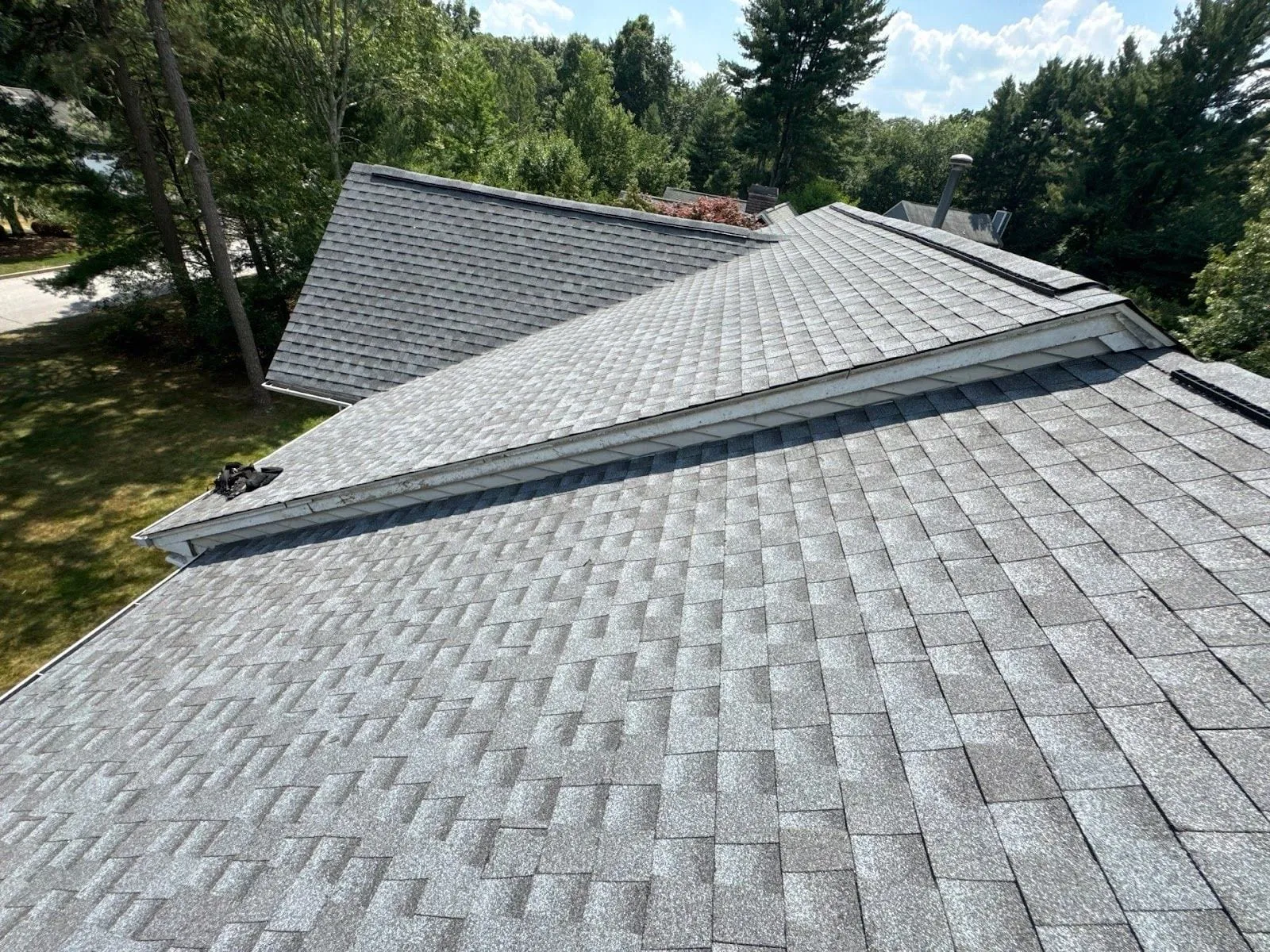
Valleys. Where two roof planes meet, snow from both slopes runs together and builds up.
Behind chimneys, dormers and other obstructions. Wind drops its snow on the leeward side.
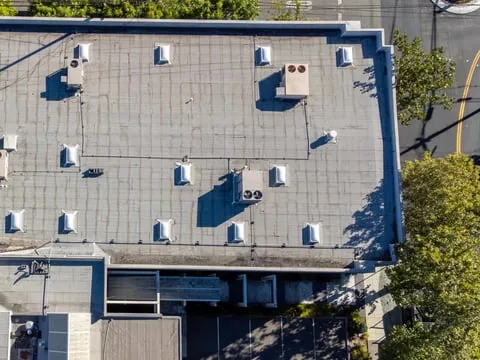
Flat and low-slope roofs. Snow does not slide off a flat roof, so it just keeps accumulating, and meltwater can pond. Rain on top of the snow adds more. Flat sections over porches, bump-outs and some additions are worth watching in particular. Many commercial buildings have flat roofs too, and the same signs apply.
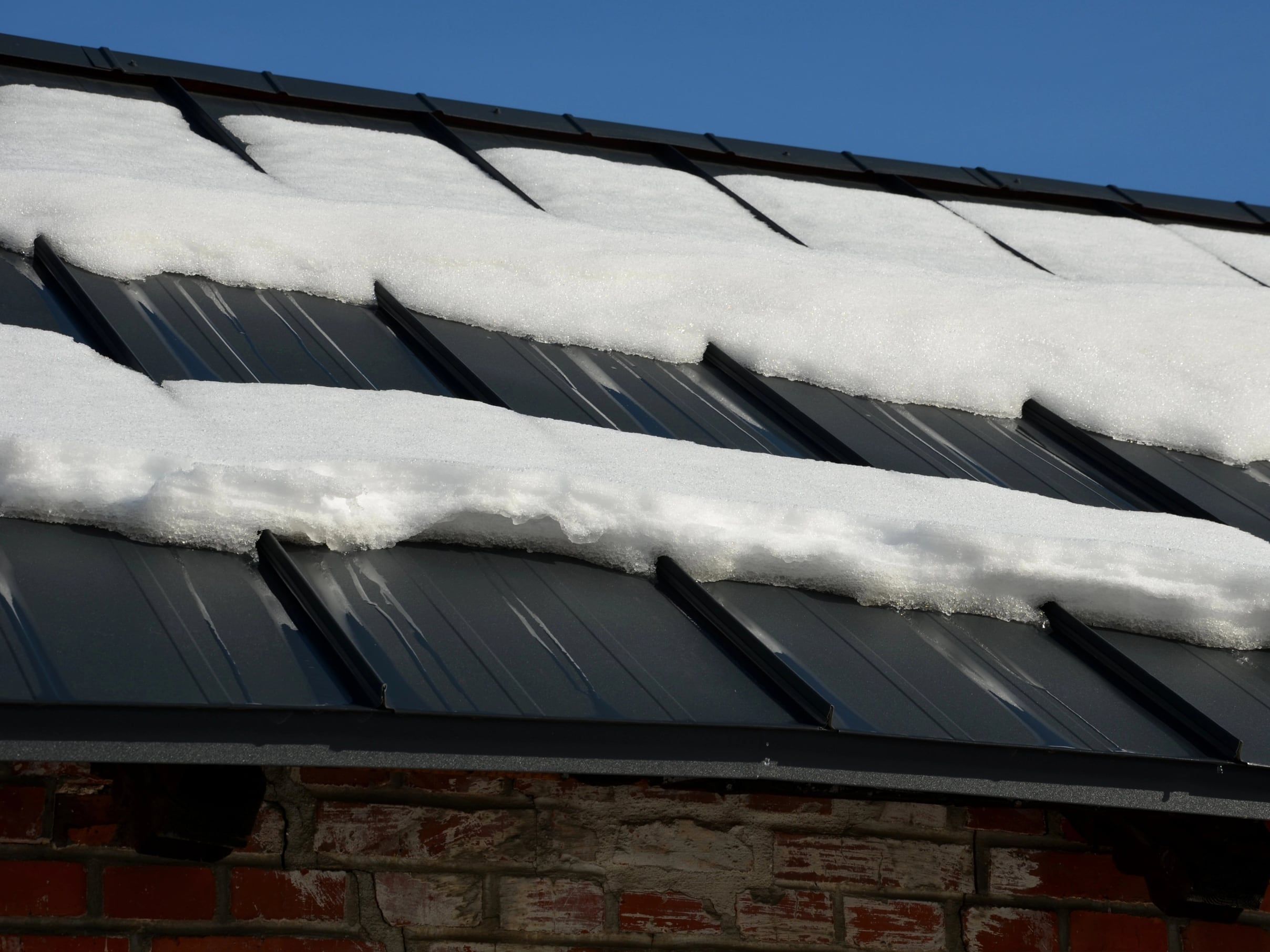
Metal roofs. Snow tends to slide off a metal roof in a sudden sheet. That lowers the load on the roof but can land on what is below it, which is why some homes have snow guards. Stay out from under the eaves of a metal roof after a storm.
Ice at the eaves adds weight at the edge of the roof and can trap water. Our ice dam prevention guide explains why it forms.
What Is Safe to Do
The short list is shorter than most people expect.
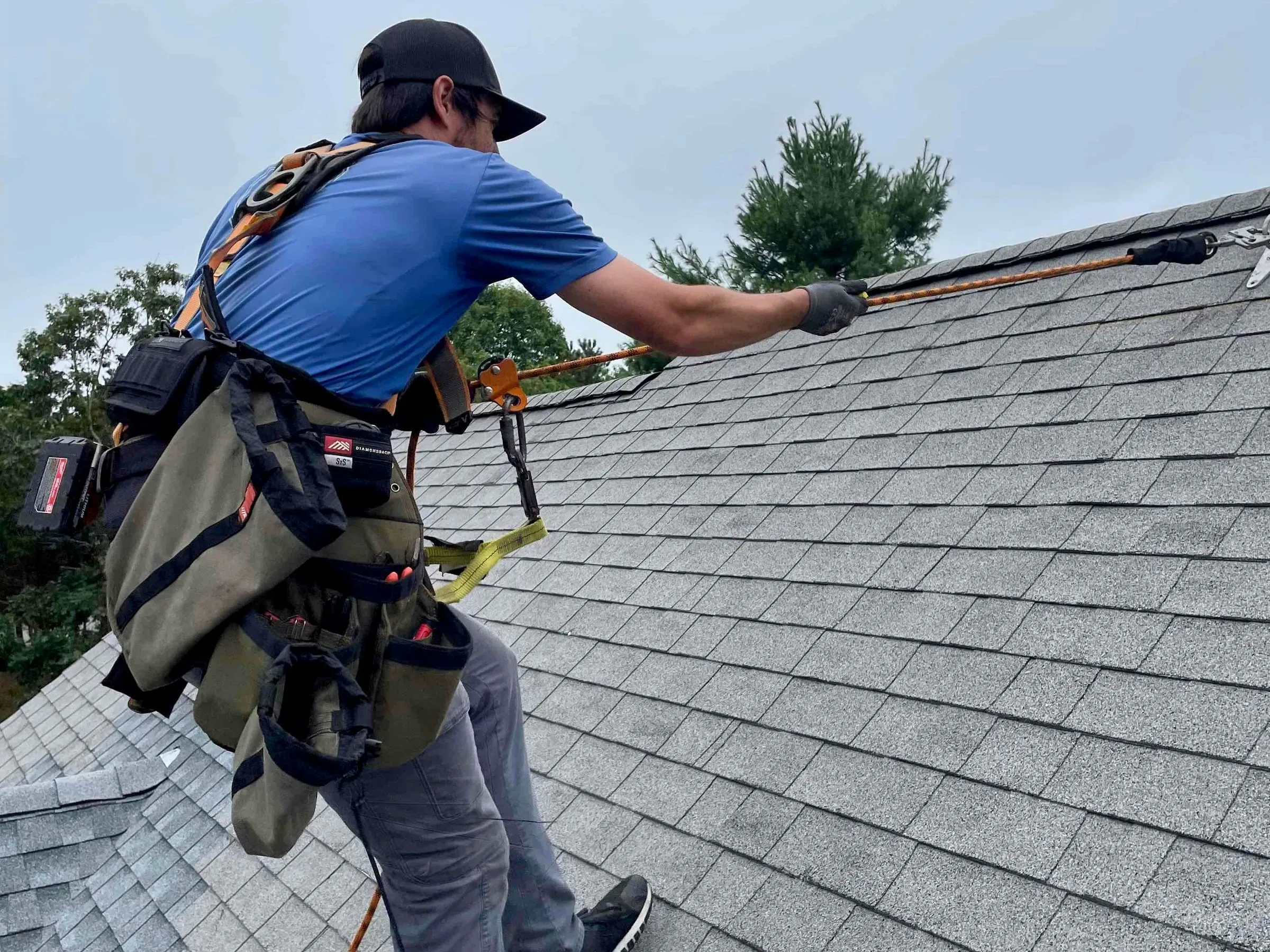
Do not go on the roof. Not with a shovel, not with a ladder, not "just for a minute." Snow hides edges and soft spots, ice makes shingles slick, and a fall from a roof is a serious injury. If a job needs you up there, it is a job for a professional with the right equipment.
From the ground, a roof rake can pull snow down from the lowest few feet of a sloped roof. Rake small amounts at a time, stand well back so the snow does not land on you, and wear a helmet. Do not scrape the roof bare, since that can scuff the shingles. Keep the pole and the rake far away from power lines and the service cable to the house, because a metal rake or pole can conduct electricity. If the lines are anywhere near, do not rake.
Keep people and pets away from the edges of the house. Falling snow and ice can injure you. Clear exits, so you can get out of the house quickly if you need to. Keep doors and the paths from them free of snow and ice.
Our ice dam removal guide covers what is lower risk and what to avoid with ice at the eaves. Do not use a hammer, pry bar or hot water on ice.
Hire it out when the roof is high, steep, icy or has power lines near it, when snow is deep on flat or low sections, or when you are not sure. A snow removal contractor can clear the roof; a roofer can look at the damage afterward.
When to Leave the House and Call
Leave if you hear loud cracking or popping, see the ceiling or roofline sag, or find doors and windows jamming while the snow is still coming down. Do not stop to pack. Get everyone out, including pets, and call 911 from outside. Stay out until someone qualified says it is safe. Keep people away from the area under a sagging section, and do not go back in to look.
New cracks or sticking doors that show up while snow is still on the roof are warning signs too, and it is hard to judge from inside how serious they are. Treat them the same way: get everyone out and call for an urgent look from a structural professional or a roofer before anyone goes back in. If water is coming in and you cannot reach anyone right away, emergency restoration work covers temporary protection. Water near a light fixture or outlet means do not touch it, and call an electrician.
After the Snow Melts
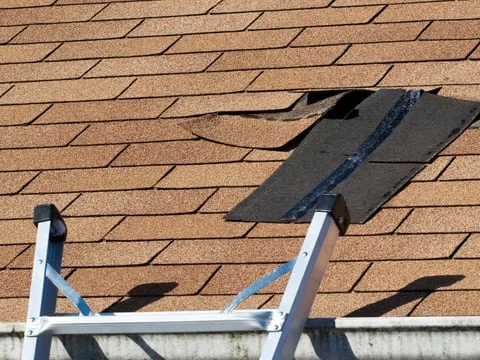
Even if nothing gave way, a heavy snow can leave damage that shows up later. Shingles can be cracked or shifted, gutters bent, flashing pushed out of place, and new stains can appear on ceilings. A roof inspection in the thaw checks all of it and turns up anything that needs roofing repair before the next storm. Take dated photos of anything that changed, which helps if you decide to file an insurance claim.
RTP Roofing is a roofing contractor in Warwick, Rhode Island. If a storm leaves you with a roof you are worried about, tell us what you saw and heard, and you can request an estimate for a look once it is safe.